- Room 525, Building 7D,Hengda Shishang Huigu, Dalang Street, Longhua District, Shenzhen, China, 518109

A purpose-built family of USB 3.0 industrial hubs — from four-port workstation companions to ten-port machine-vision anchors. Every port delivers the full 5 Gbps, and every hub is engineered to run 24/7.
Industrial cameras stream uncompressed 1080p at 60 fps — around 3 Gbps of sustained bandwidth. 3D scanners push live point clouds at 2 Gbps. USB 2.0 caps out at 480 Mbps. There is no negotiation, no compromise setting. You either move the data or you don't.
Four industrial cameras on a USB 2.0 hub each fight for a 120 Mbps slice. High-power sensors brown-out on startup. Drop-outs become the default state.
The same four cameras run at full frame rate simultaneously. LiDAR, high-power SSD arrays and depth sensors boot without a voltage sag. This is the working configuration.
Metal enclosures. 12 V industrial power. Screw-down mounts. Every hub in the automation range is designed to sit inside a control cabinet, on a robot flange or beside a servo drive — and just work, quietly, for years.
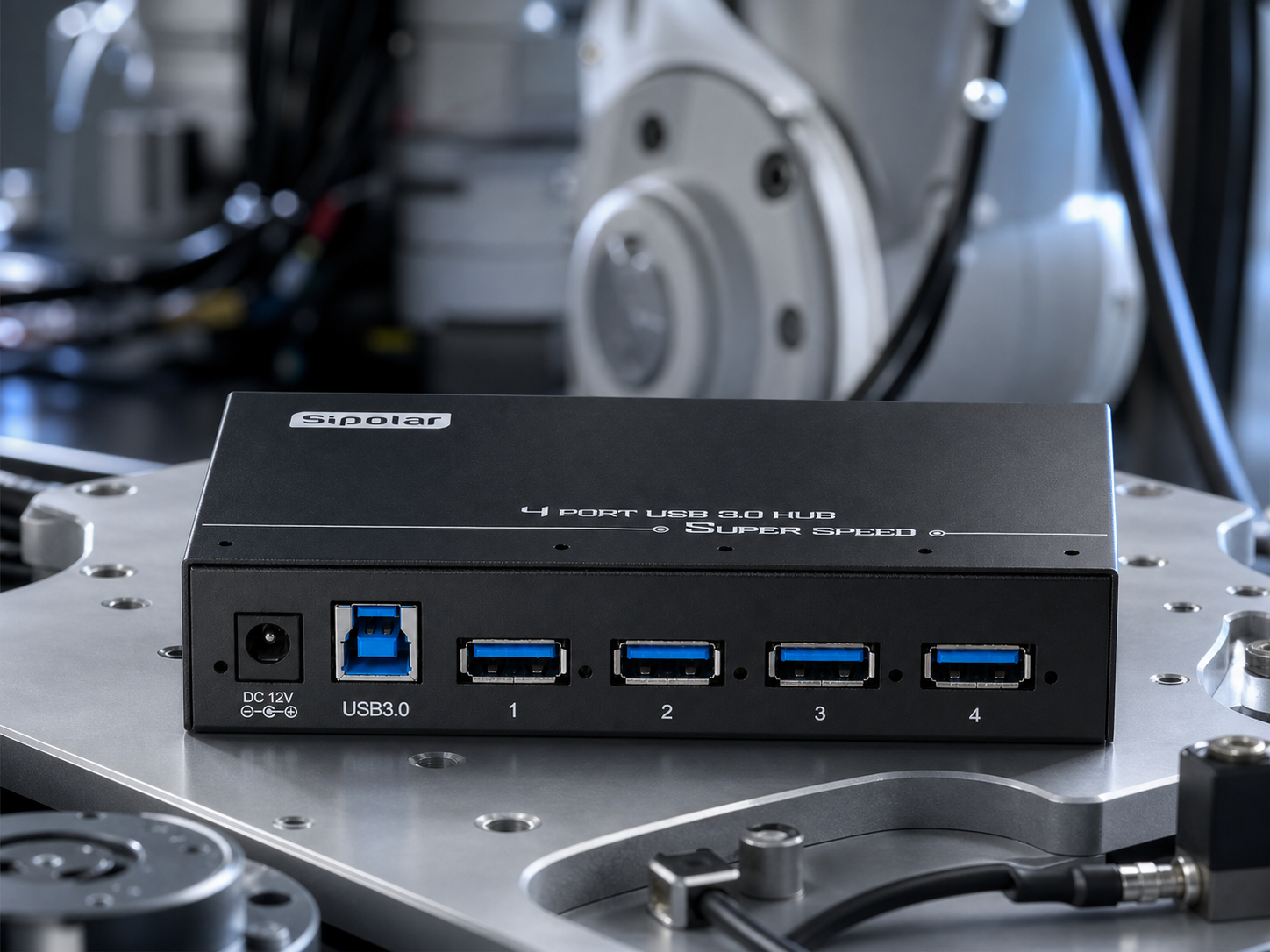
AX-143 is the quiet workhorse of a machine-vision cell. Four ports of full 5 Gbps bandwidth is enough headroom to run an industrial camera, a lighting controller and a frame-grabber in parallel — no bottleneck, no drop-outs.
Independent 12 V input decouples the hub from the host's USB power budget. An extruded aluminium shell handles heat and EMC shielding in the same part. Small enough to sit inside a control box, tough enough to stay there.
Industrial cameras, 3D depth sensors and SSD arrays pull heavy inrush current the moment they boot. A one-amp-per-port hub sags under that load — devices drop, the OS never enumerates them, the line stops.
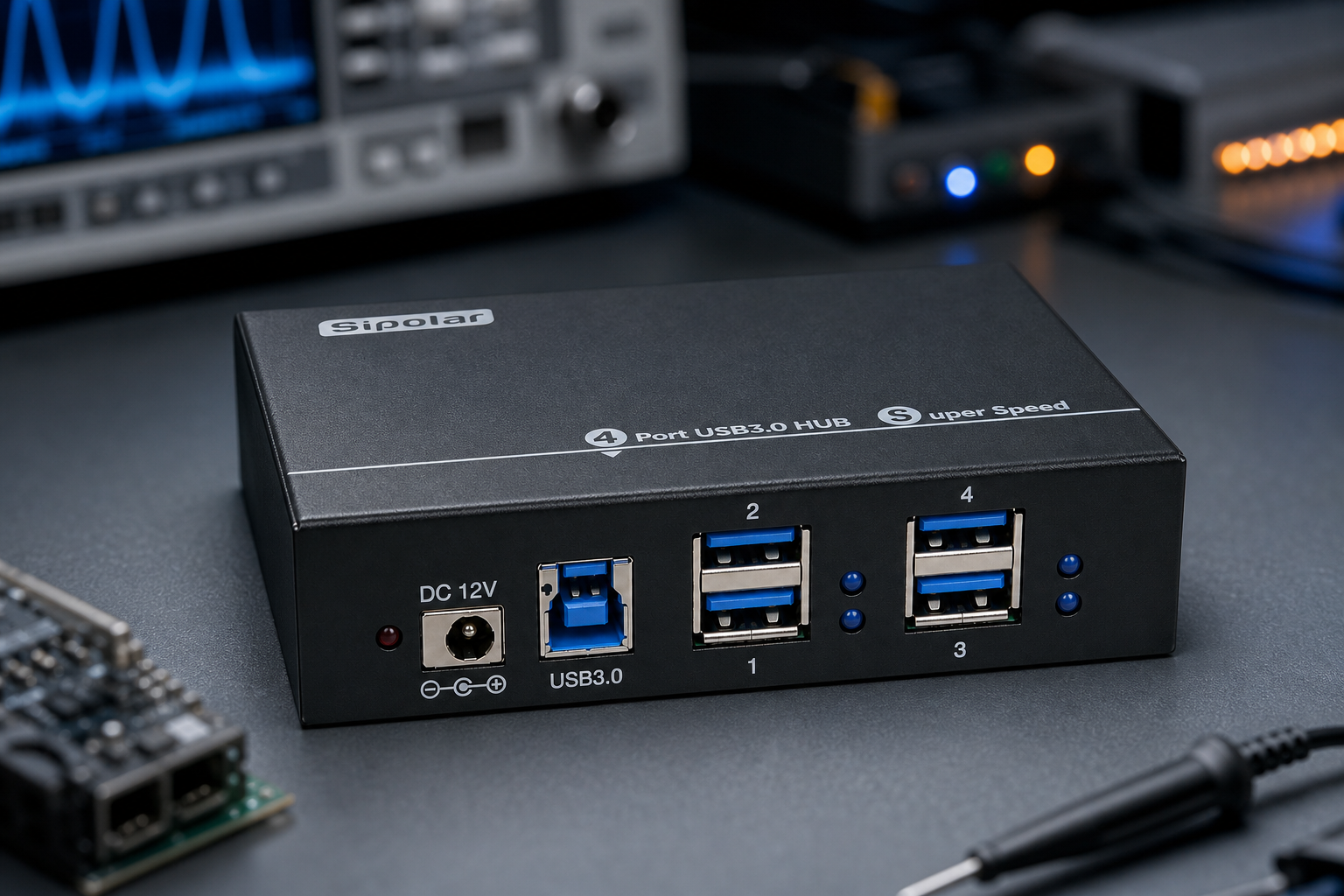
A-4U30 delivers up to 2.4 A on every port, with more than enough overhead to keep power-hungry USB 3.0 peripherals stable through cold starts and sustained duty cycles. Full metal chassis stays under 55 °C at full load. Screw-mount holes let you fix it to a robot flange, an AGV chassis or a cabinet wall.
The choice between AX-143 and A-4U30 is not about ports.— Engineering Note
It's about what those ports have to carry.
When one workstation runs six cameras, two lighting controllers, a barcode reader and a PLC link, port count is not a spec sheet number. It's what decides whether the whole cell fits on a single hub or splinters across three.
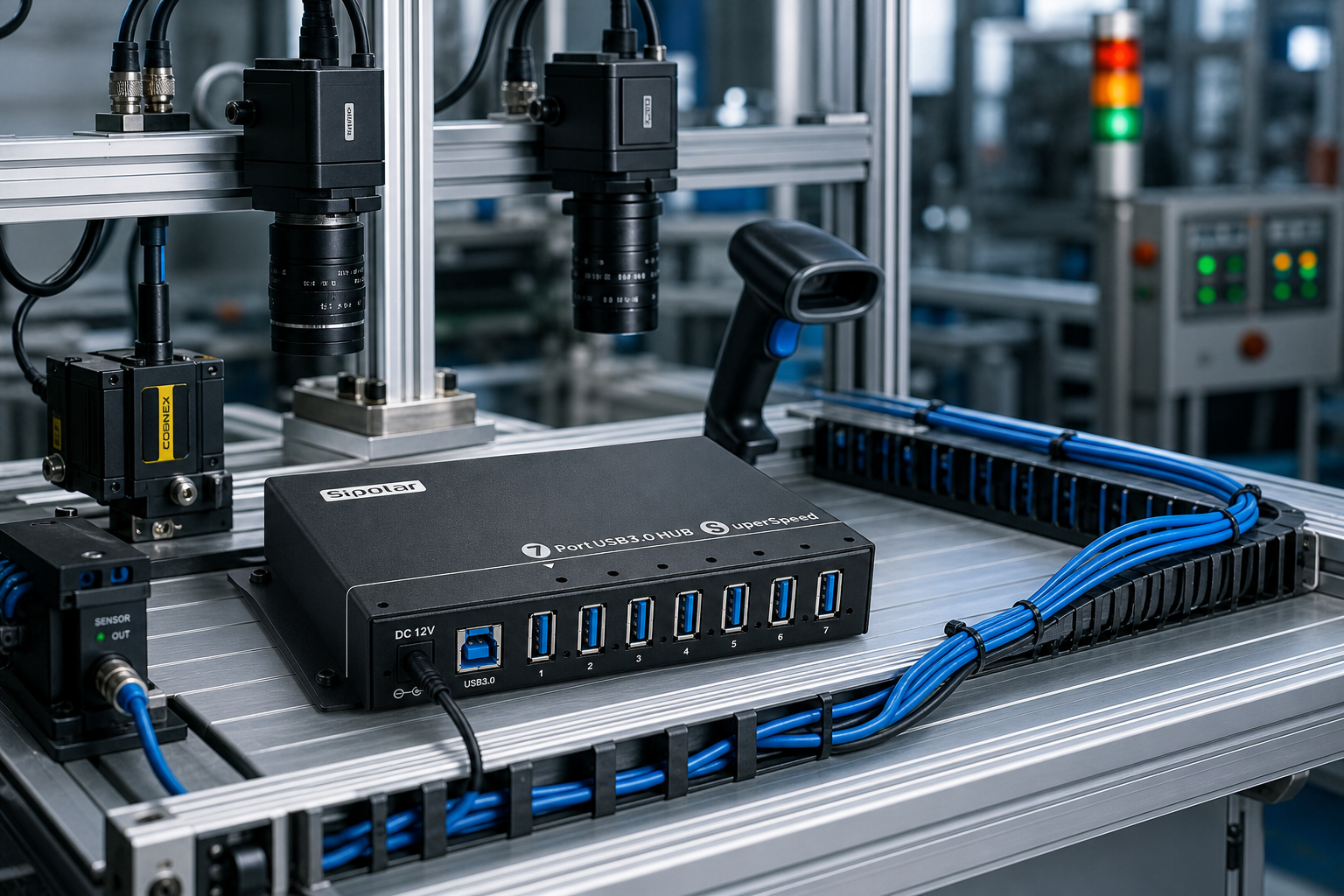
A-173 is sized for the way real automation stations look: four industrial cameras plus two lighting controllers plus a PLC channel, or six sensors plus a barcode reader. Four ports is one short, ten ports is wasted metal — seven is the configuration that fits.
The heavy metal shell suppresses interference from nearby VFDs and servo drives, and the mounting flanges let you fix it to a cabinet wall, a workstation underside or a machine sub-plate without a bracket.
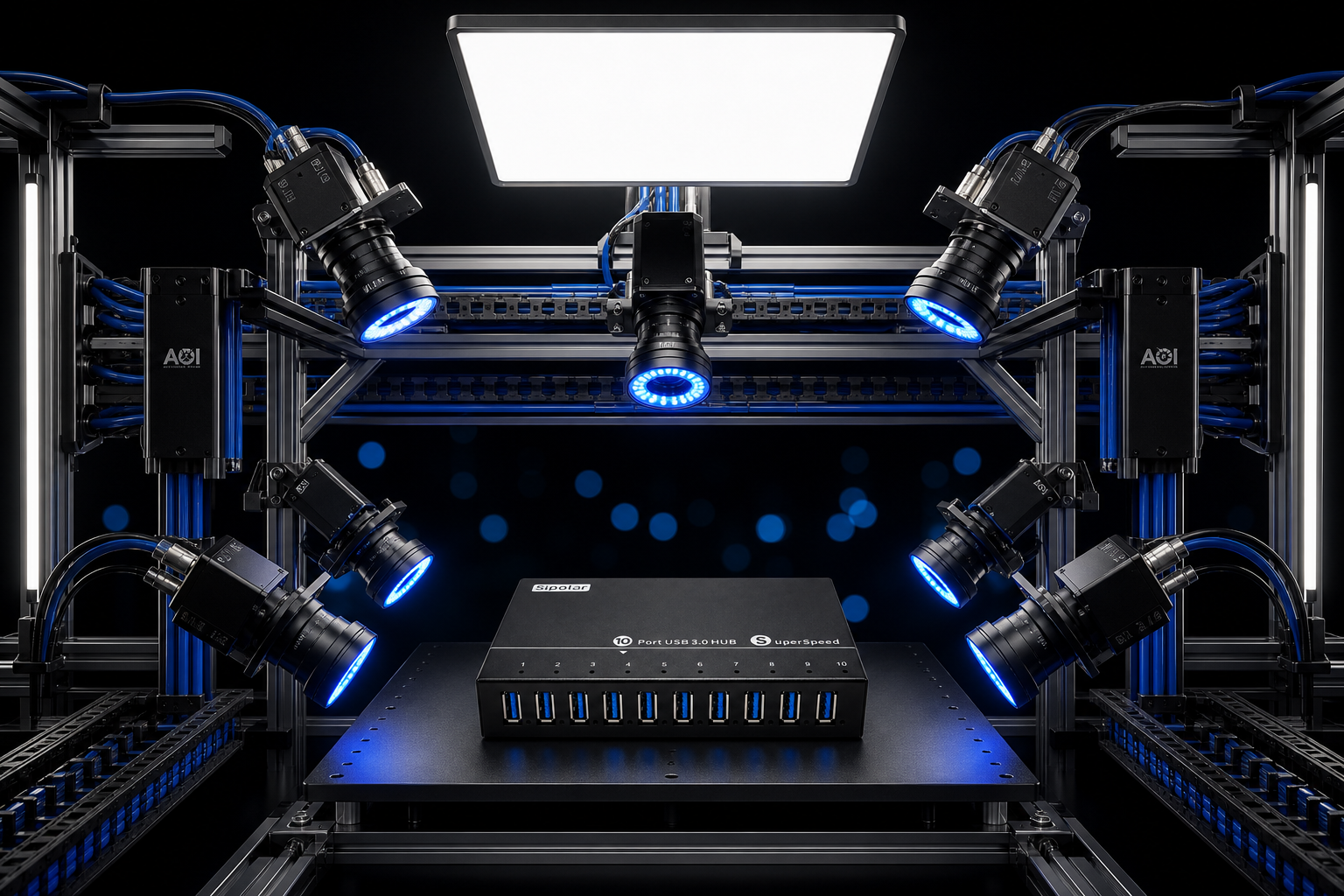
A-103 was engineered around a specific customer: the AOI line. Six industrial cameras across multiple angles, two lighting controllers, one barcode reader, one PLC channel — all consolidated onto one hub, on one 12 V rail, behind one 2 mm shielded chassis.
Verified in high-EMI environments with zero communication errors. Rated to run six to eight industrial cameras concurrently at typical 5–8 W loads. Fit for AOI, 3D scanning, motion analysis and vision-guided assembly.
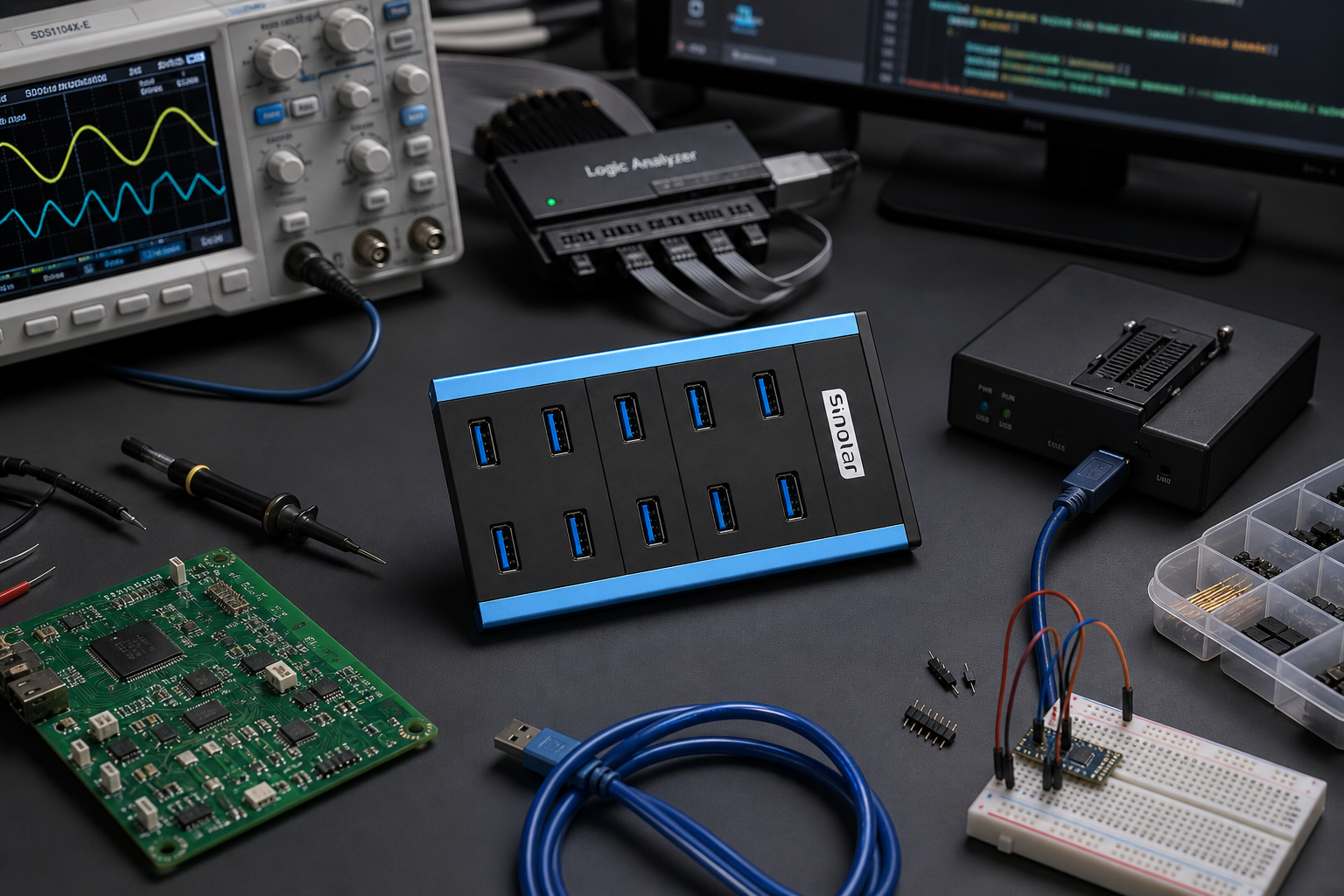
FD-503 shares the port count of the A-103 but a different intent. Ports are laid out in a single row for direct, hands-on plug and unplug — the layout an R&D engineer wants when a bench has six probes, three programmers and a rotating set of DUTs.
Integrate it inside an automation enclosure, or leave it on a desk. 12 V input and metal chassis handle either environment without compromise.
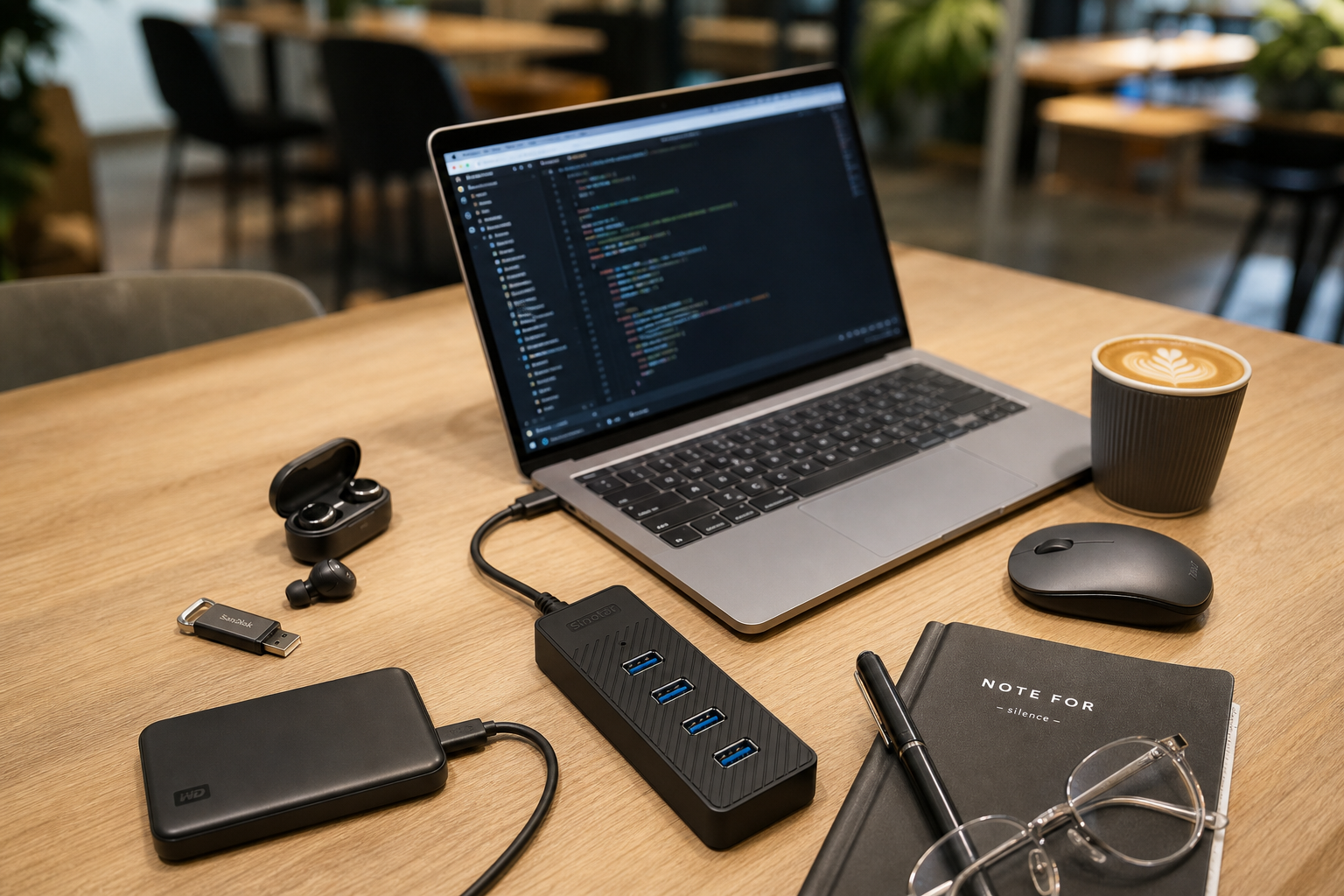
For the laptop that follows an engineer between labs, between cities, between customers. Bus-powered, four ports of USB 3.0, and small enough that it lives in the same sleeve as the machine it extends.
FS-4A30H2 is engineered for the mobile case: the laptop-first engineer, the on-site test rig, the temporary bench where a wall socket is a luxury. A single Type-A upstream cable carries both data and power to four downstream 5 Gbps ports.
The everyday configuration writes itself — flash drive, mouse, keyboard, portable SSD — and the whole thing fits in a jacket pocket. When the laptop moves, the hub moves with it.
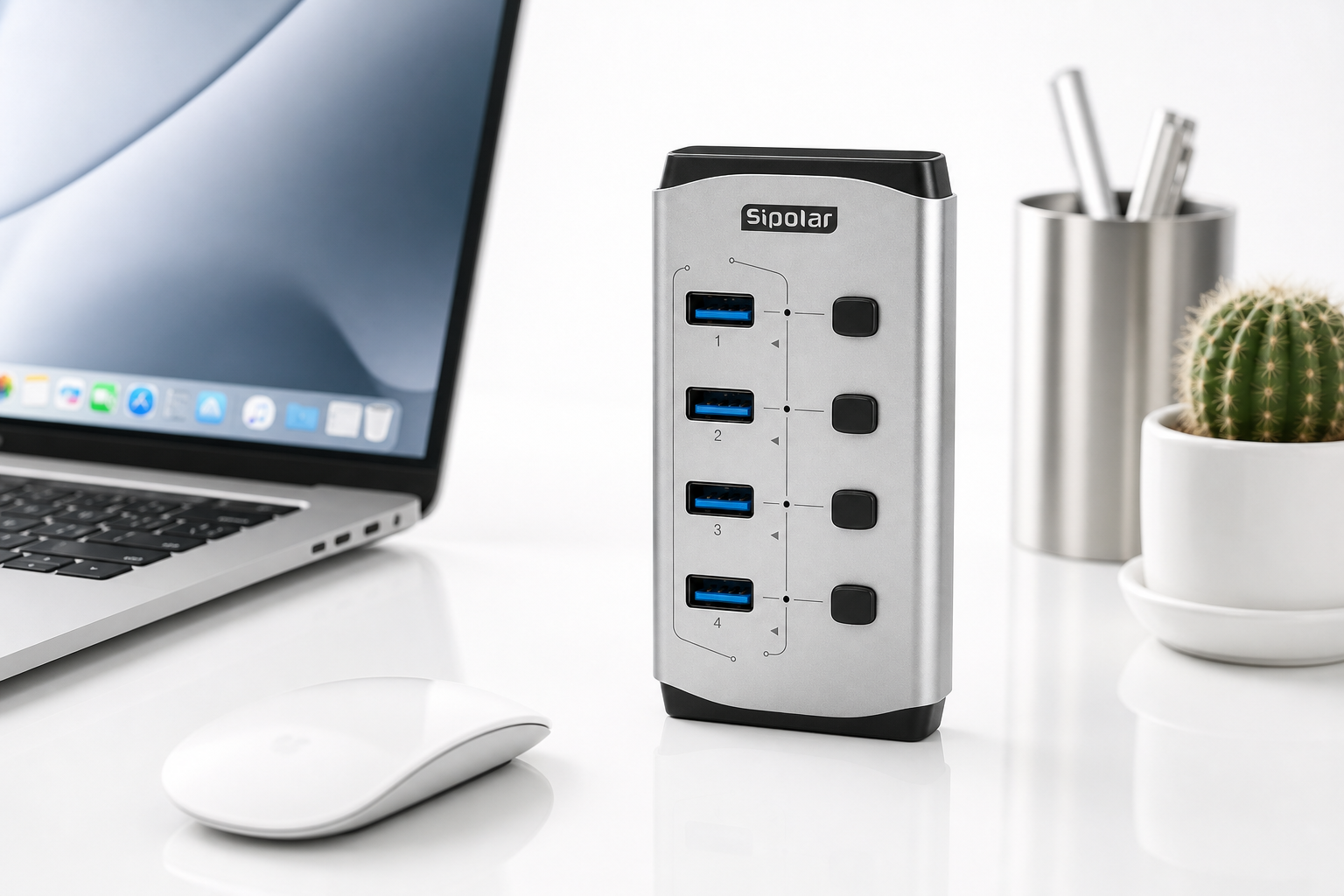
Not every industrial-grade hub belongs inside a control box. Some belong right in front of you — where the material, the switch feel and the port geometry are just as much part of the product as the silicon inside.
FS-804 replaces the industrial black brick with a matte-aluminium enclosure worth the space it occupies. Type-C upstream connects modern laptops and workstations without adapters; four Type-A ports handle daily peripherals.
Every port has its own hardware switch, so a scope, a logic analyser, a programmer and a flash drive can each be cut individually — no more repeatedly plugging and unplugging to reset the enumeration on one stubborn device.
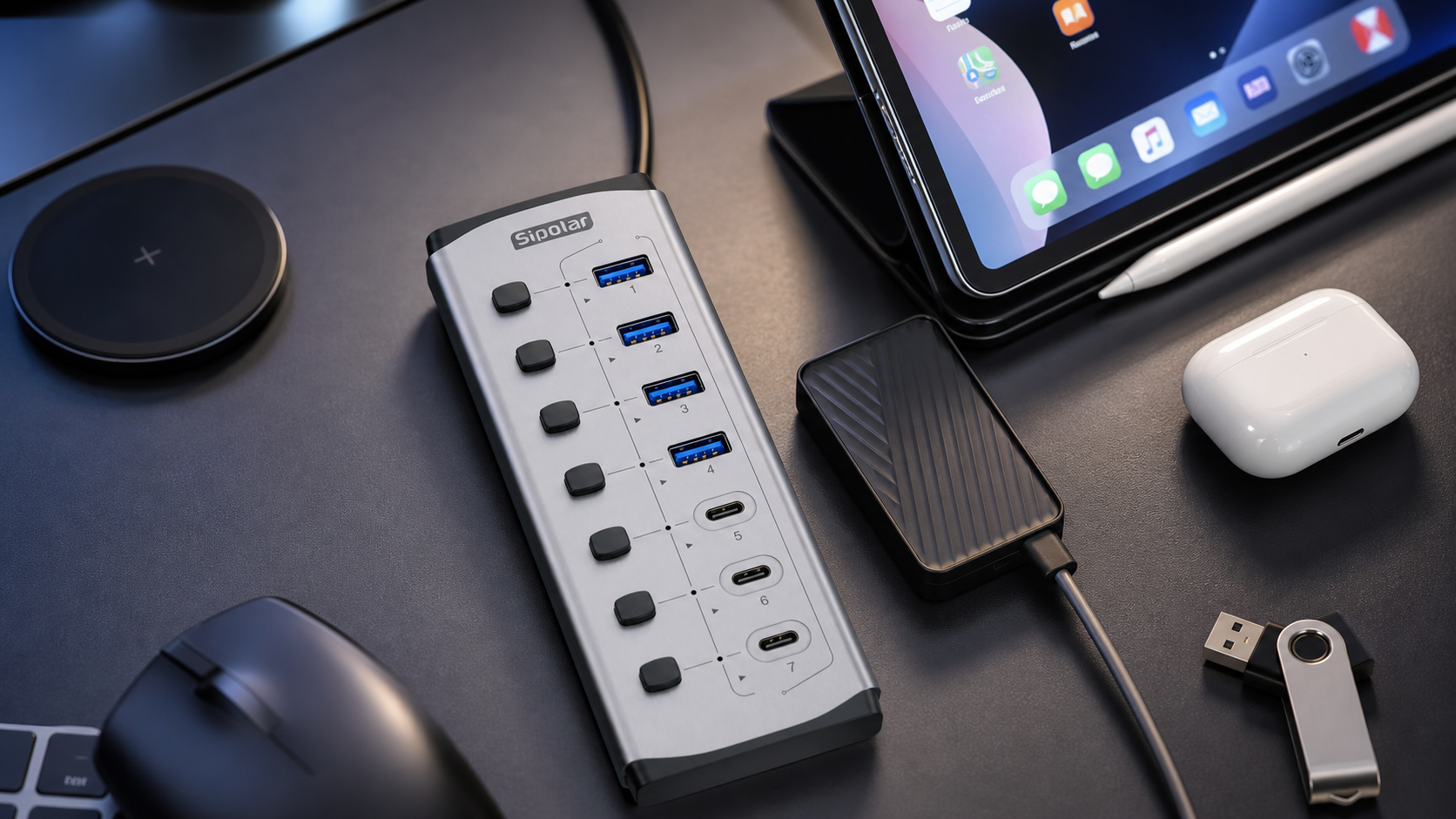
FS-809 is the answer to the reality that no engineer's peripherals age together. Four Type-A ports serve legacy drives, keyboards and dongles. Three Type-C ports serve modern SSDs, cameras and tablets — no adapters, no signal loss.
Reversible Type-C insertion, per-port hardware switches, anodised chassis. Sized for a demo table, a maker workbench, or the desk of whichever engineer refuses to throw the old gear away.
Every hub in the range has been installed, iterated on and refined in the environment it was designed for. These are the environments.
Standard four-port workhorse. Best when the connected devices are keyboards, sensors, thumb drives — general-purpose loads inside a machine.
Same port count as AX-143, but engineered for the power-hungry side of the shelf: cameras, SSD arrays, depth sensors, frame grabbers.
The seven-port sweet spot. Sized for one production workstation with multiple cameras plus lighting plus a PLC link, on a single hub.
Reference configuration for AOI cells. Six to eight cameras concurrently, on one shielded 12 V rail.
Same density as A-103, laid out flat for hands-on plug and unplug. Sits on a bench, or fits into an enclosure.
The travel hub. Draws power from the host, plugs into any laptop, adds four full 5 Gbps ports on demand.
Anodised aluminium, Type-C upstream, individual switches on every port. For engineers who care what sits on their desk.
Legacy Type-A meets modern Type-C on the same chassis. For the desk that has to serve both generations of gear.
Port layouts, power budgets, connector orientation and firmware behaviour can be tailored for volume programs. Talk to us early — we design around your form factor.
Talk to our engineering team about your machine, your camera count and your power budget — we'll shortlist the exact model within one message.