
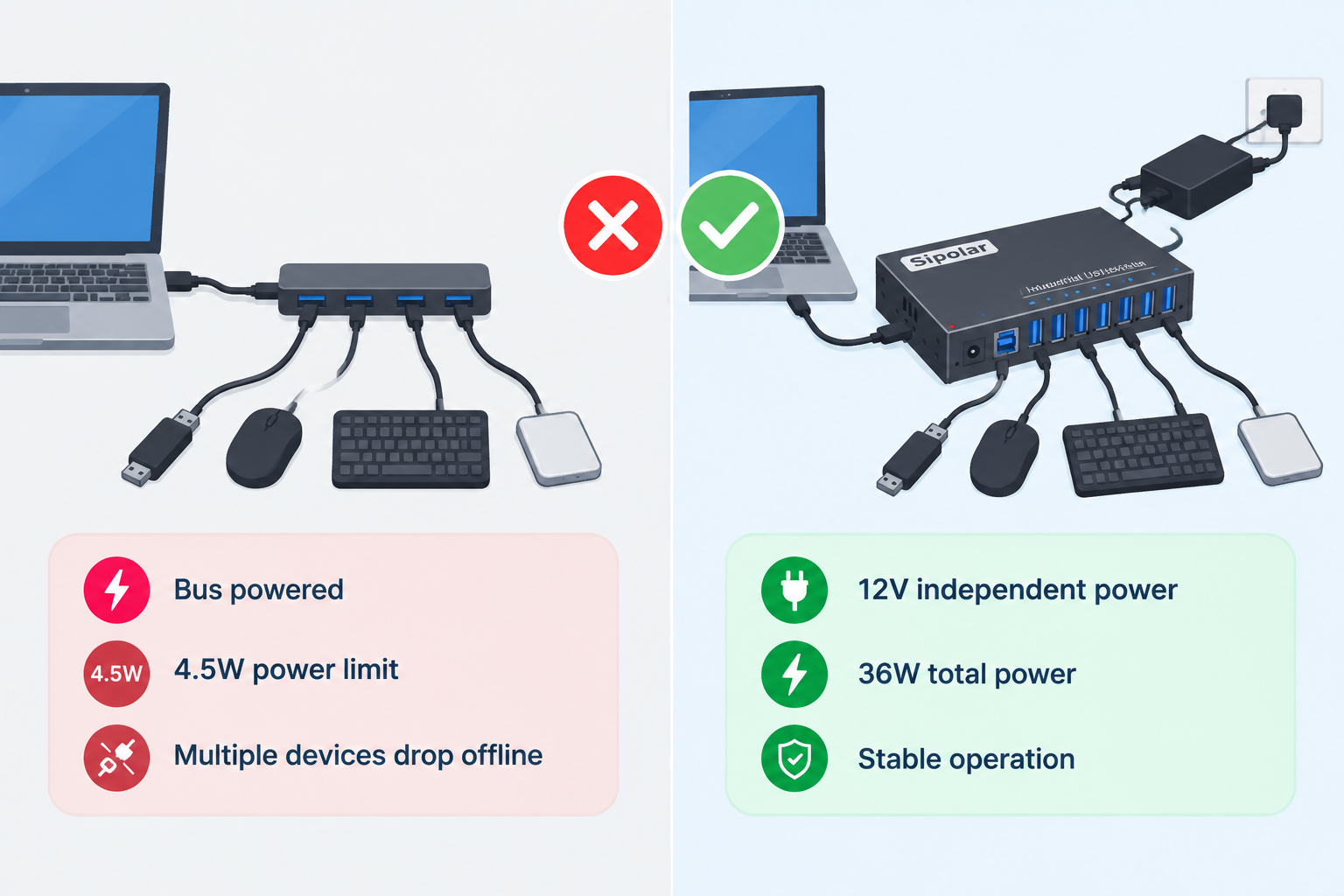
Power fundamentals
USB hubs fall into two power categories: bus-powered (drawing power from the host computer) and self-powered (using an external power adapter). The distinction determines device compatibility, charging capability, and system reliability.
Critical consideration
Bus-powered hubs share limited host power (typically 4.5W max) across all ports. High-power peripherals like external drives, charging tablets, or industrial sensors require self-powered hubs with dedicated 12V/5A supplies delivering 36W total capacity.
Power delivery types
Bus-Powered Limitations
- 4.5W power ceiling (900mA @ 5V USB 3.0)
- Devices drop offline under load
- No fast-charging support
- Unstable with multiple peripherals
Suitable only for low-power devices: keyboards, mice, USB flash drives
Self-Powered Advantages
- 36W independent power (12V/5A)
- Stable multi-device operation
- Fast-charging capable (2.4A per port)
- Industrial-grade reliability
Required for: external HDDs, tablets, cameras, industrial sensors, automation equipment
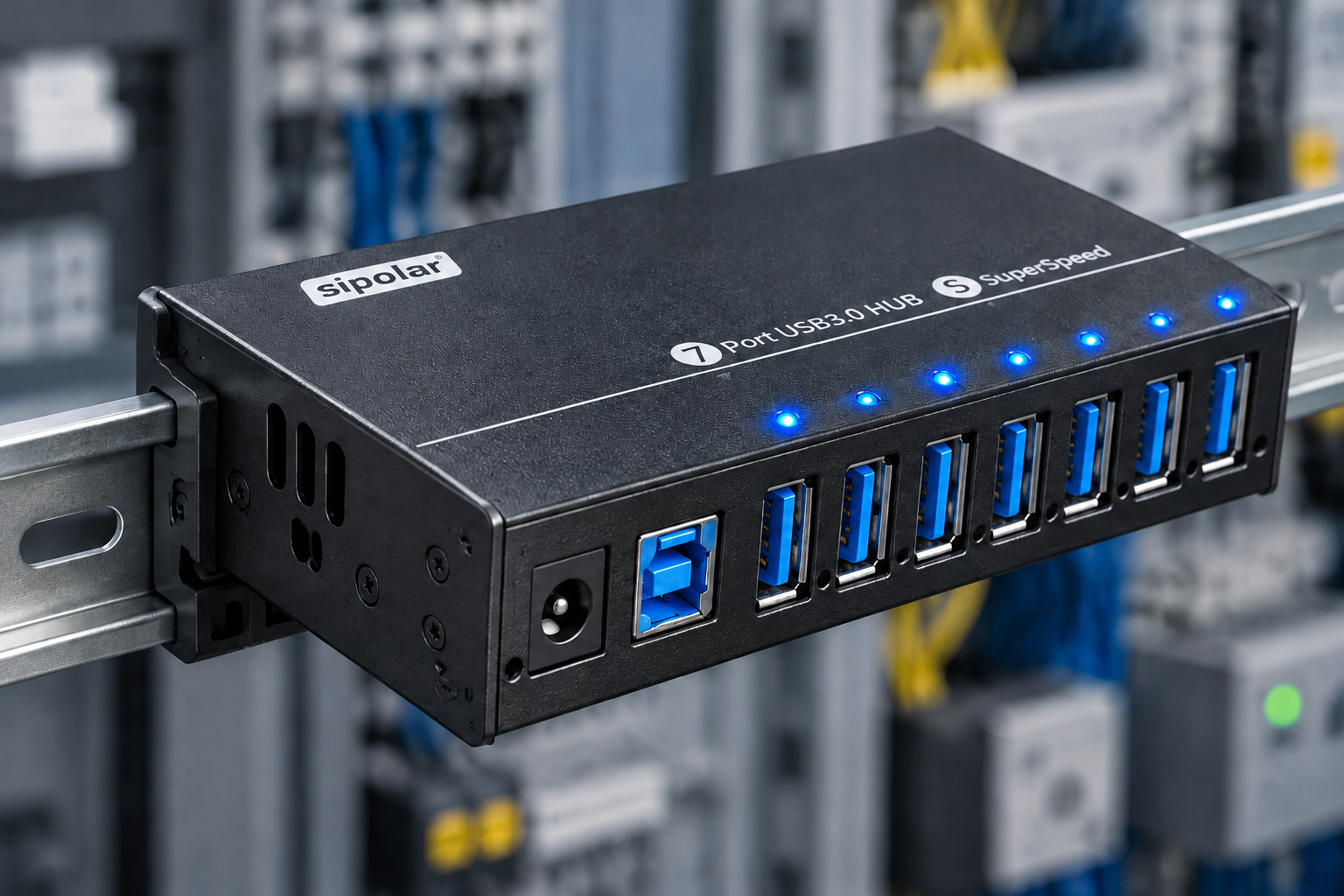
Desktop USB 3.0 hub with 12V external power adapter for reliable multi-device connectivity
Selection decision tree
Count high-power devices
External hard drives, tablets requiring charge, USB-powered monitors, industrial cameras, and barcode scanners all demand >500mA per device. If your setup includes 2+ such devices, bus power is insufficient.
Calculate total power requirement
USB 3.0 allows 900mA per port (4.5W @ 5V). A 7-port bus-powered hub sharing one 4.5W supply cannot support even two 2.5" external drives (each drawing 900mA). Self-powered hubs allocate 12V/5A = 60W input, delivering 36W sustained across ports.
Assess environmental factors
Industrial environments with temperature extremes (-40°C to +85°C), vibration, or 24/7 operation mandate self-powered hubs with metal housings, overcurrent protection, and independent power circuits to prevent brownouts.
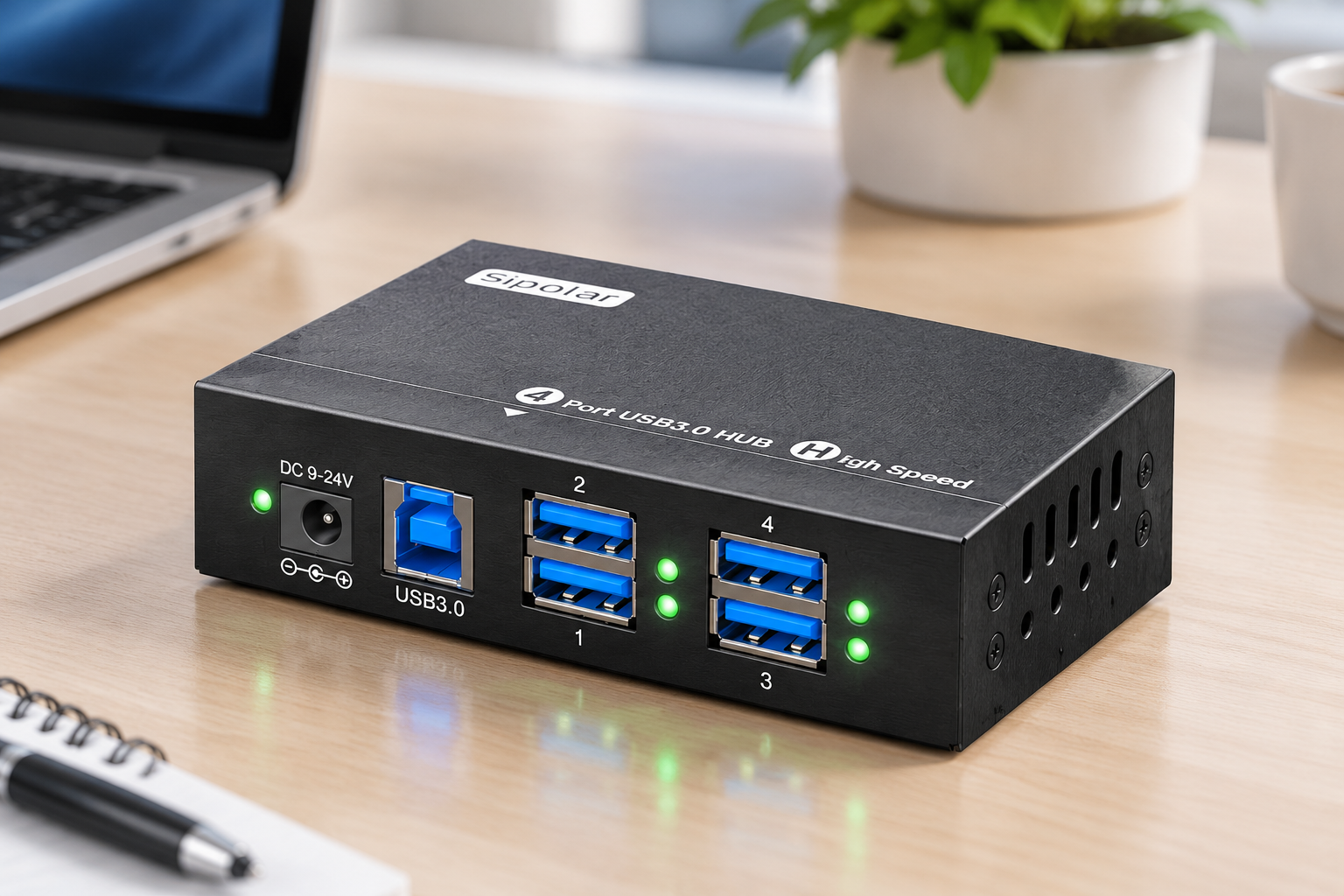
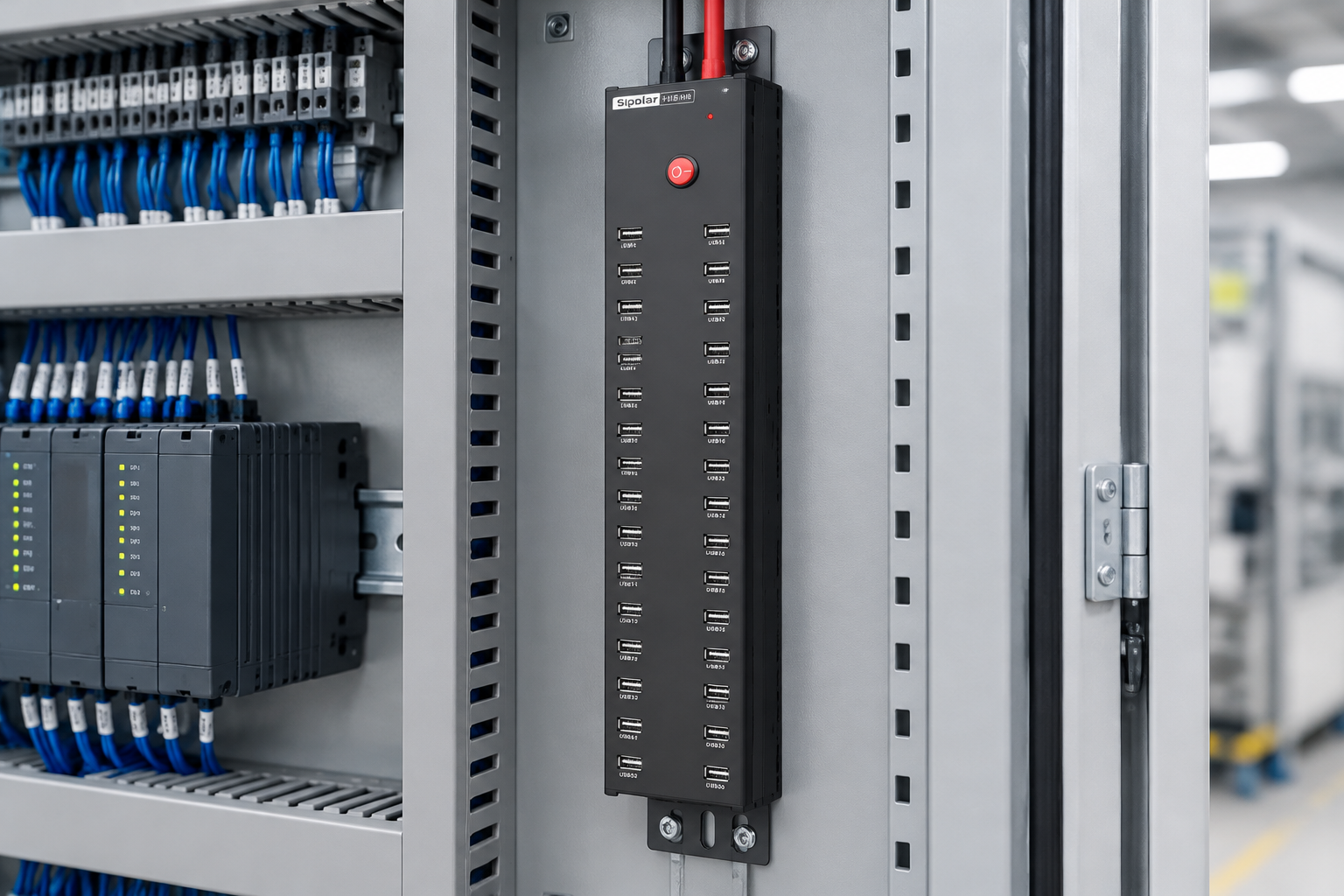
DIN-rail USB hub with independent 12V power for control cabinet integration
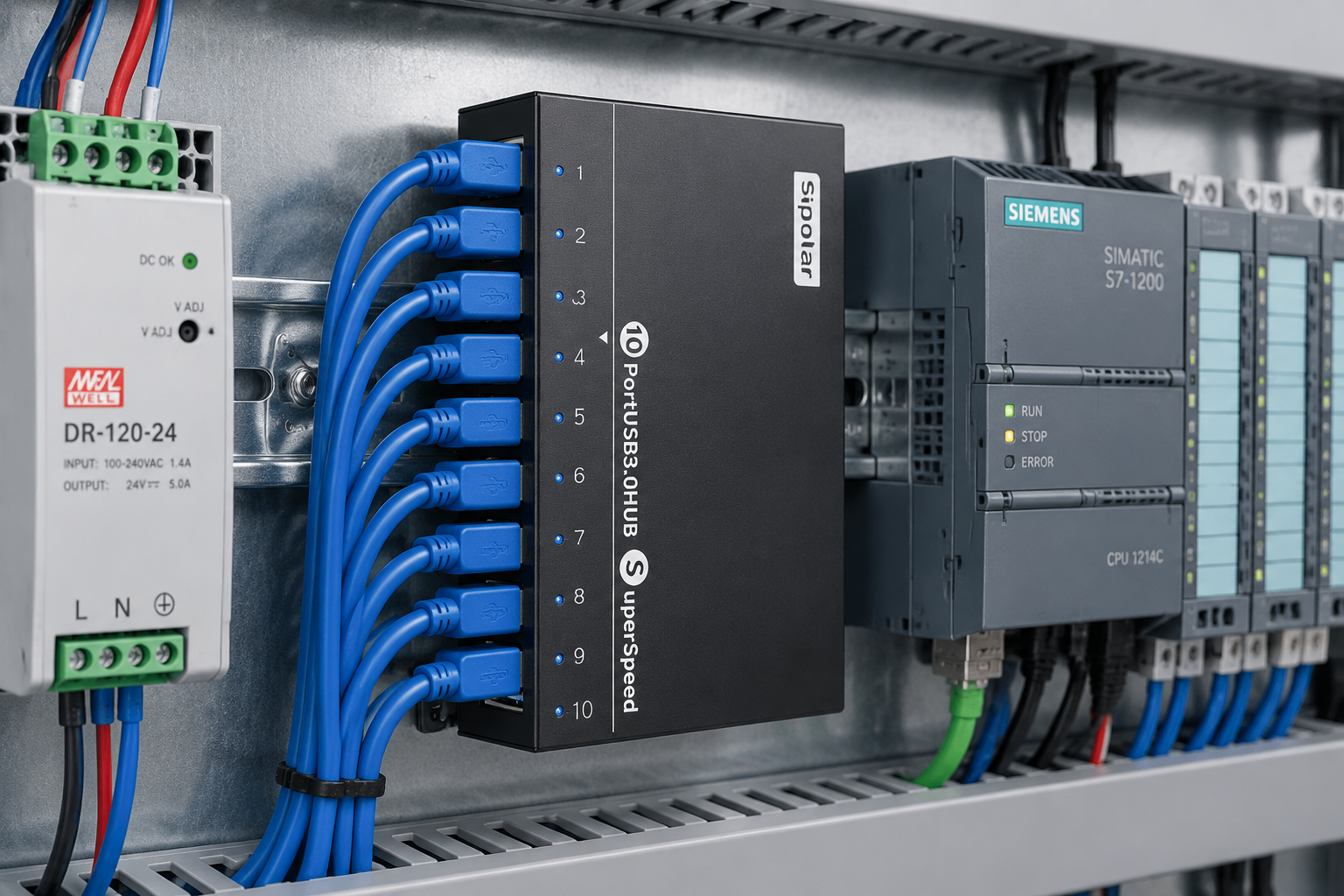
16-port vertical hub with labeled ports for factory automation systems
Application scenarios
Industrial Automation
PLC connectivity for HMI panels, barcode readers, label printers, and industrial cameras. Self-powered hubs eliminate power-related dropouts in 24/7 production lines. Aluminum housing withstands factory floor conditions.
Multi-Device Testing
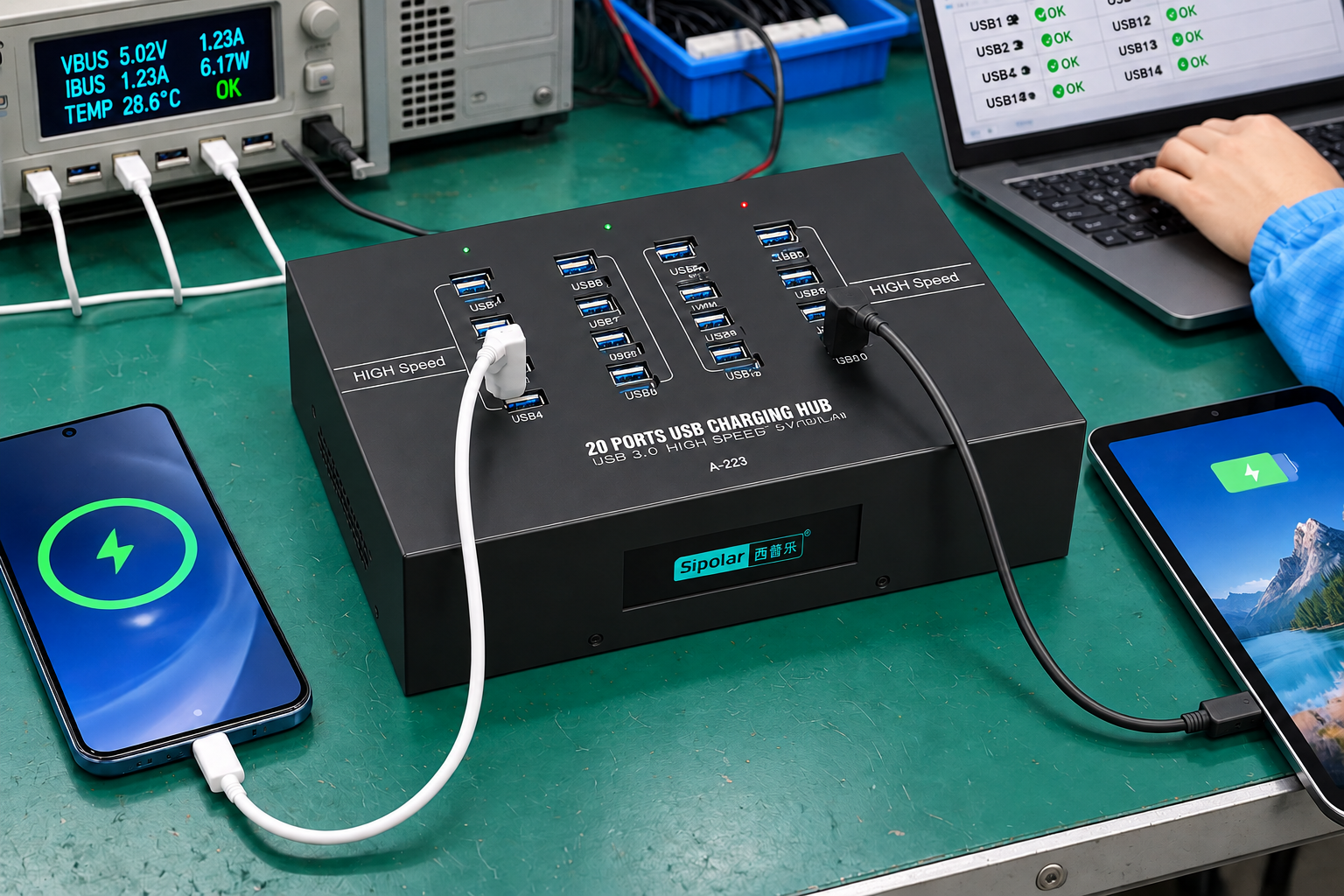
QA labs and service centers testing smartphones, tablets, and peripherals simultaneously. 2.4A fast-charging per port enables device conditioning while running diagnostic software. Independent power prevents cross-device interference.
Recommended specifications
Standard Requirements
| Power Input | 12V / 3A minimum |
| Per-Port Current | 900mA (USB 3.0 spec) |
| Total Output | ≥ 20W for 7-port hubs |
| Protection | Overcurrent, ESD, surge |
Industrial Requirements
| Power Input | 12V / 5A (36W sustained) |
| Operating Temp | -40°C to +85°C |
| Housing | Metal (aluminum alloy) |
| Mounting | DIN-rail / wall-mount |
Implementation guidelines
Always use the supplied power adapter
Generic adapters may lack sufficient amperage or voltage regulation, causing intermittent device recognition and potential data corruption during file transfers.
Verify total load before deployment
Document each connected device's power draw (check product specs or use a USB power meter). Ensure total load stays below 70% of hub's rated capacity to allow headroom for inrush current.
Position hubs near devices, not hosts
USB 3.0 cables degrade beyond 3 meters. Place self-powered hubs close to peripherals and use a single long cable to the host computer to minimize signal loss.
Industrial: use locking cables
Screw-lock USB connectors prevent accidental disconnection in vibration-prone environments. Combine with cable strain relief for production-floor reliability.
Making the right choice
Bus-powered hubs serve basic office peripherals but fail under load. For professional workflows—content creation, industrial control, device testing, or any scenario with external storage and charging—self-powered hubs are not optional upgrades but foundational infrastructure.
Sipolar's industrial USB hubs deliver 12V/5A independent power, -40°C to +85°C operation, and metal enclosures designed for DIN-rail mounting in control cabinets. Contact our engineering team to specify the right connectivity solution for your application.