Multi-device power delivery
Sufficient power output per port to support VR headsets with active cooling, tracking systems, and integrated audio without compromising performance.

Enterprise VR Infrastructure
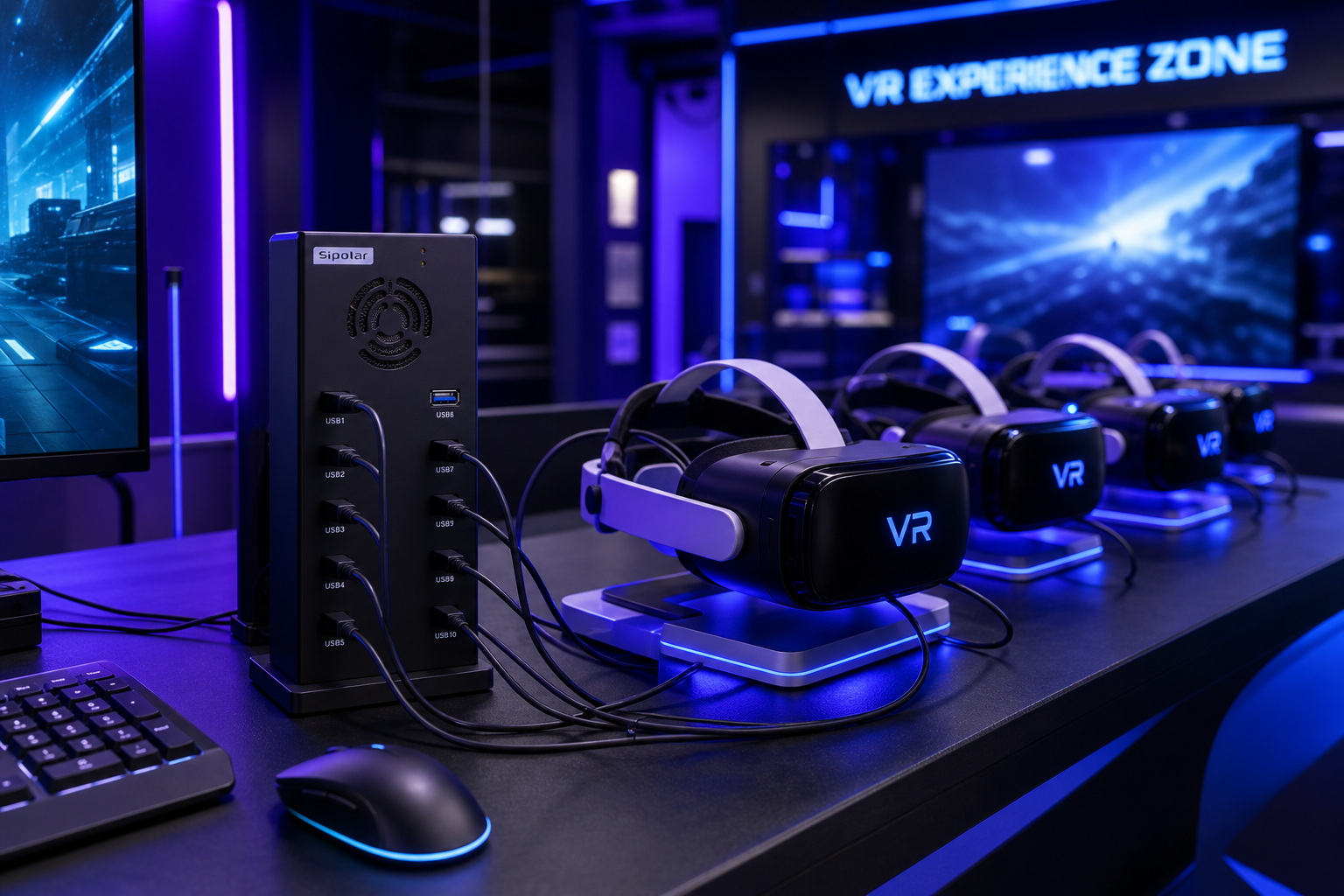
Purpose-built USB expansion systems designed for VR experience centers, training facilities, educational institutions, and commercial venues that require reliable simultaneous management of multiple VR headsets.
Infrastructure Challenge
Operating multiple VR headsets simultaneously presents unique infrastructure challenges: stable power delivery, high-bandwidth data transmission, centralized management, and organized cable routing—all while maintaining reliable performance across every connected device.
This VR connectivity platform addresses these requirements through industrial-grade USB expansion hardware designed specifically for commercial multi-headset environments where uptime and user experience are critical.
System Architecture
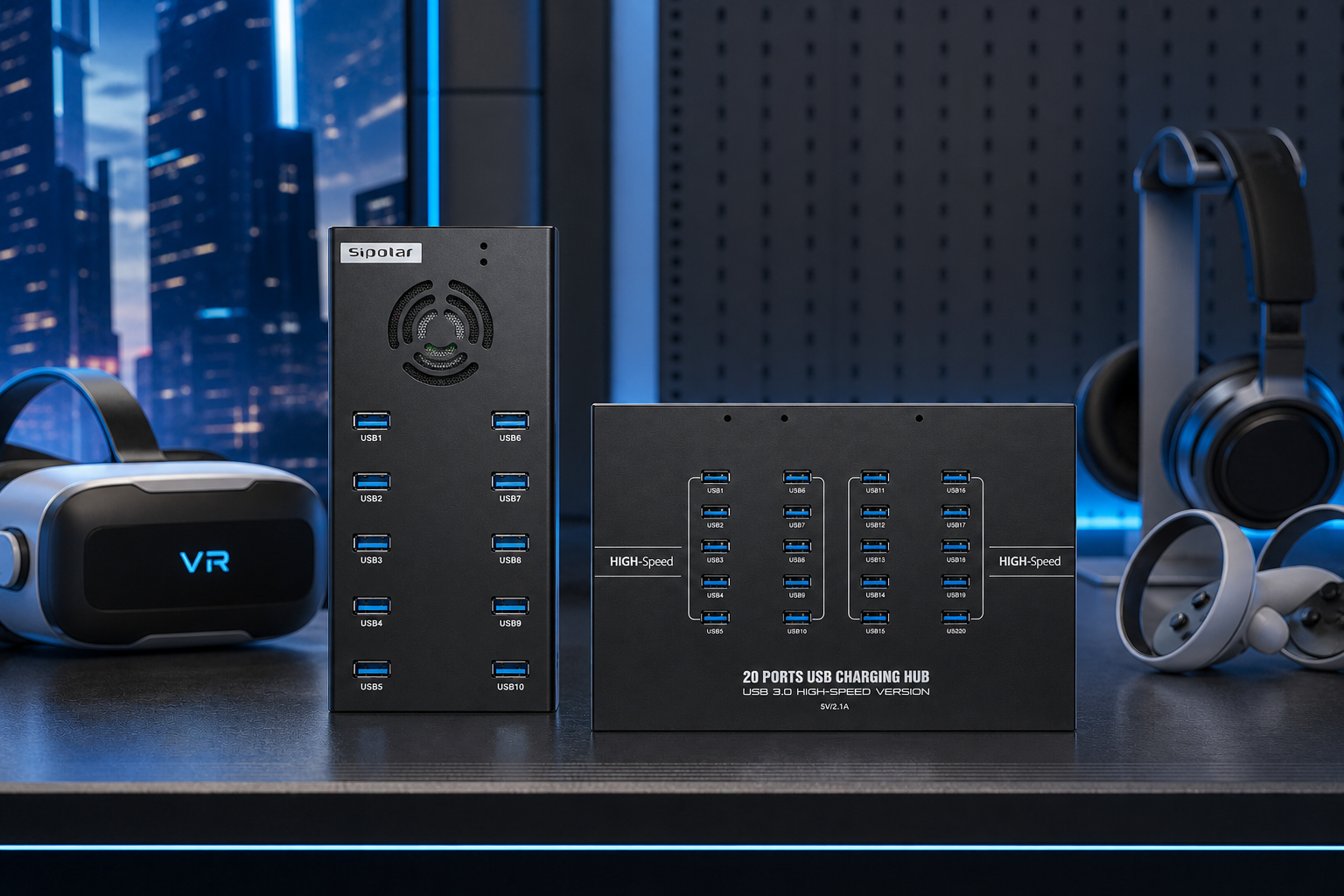
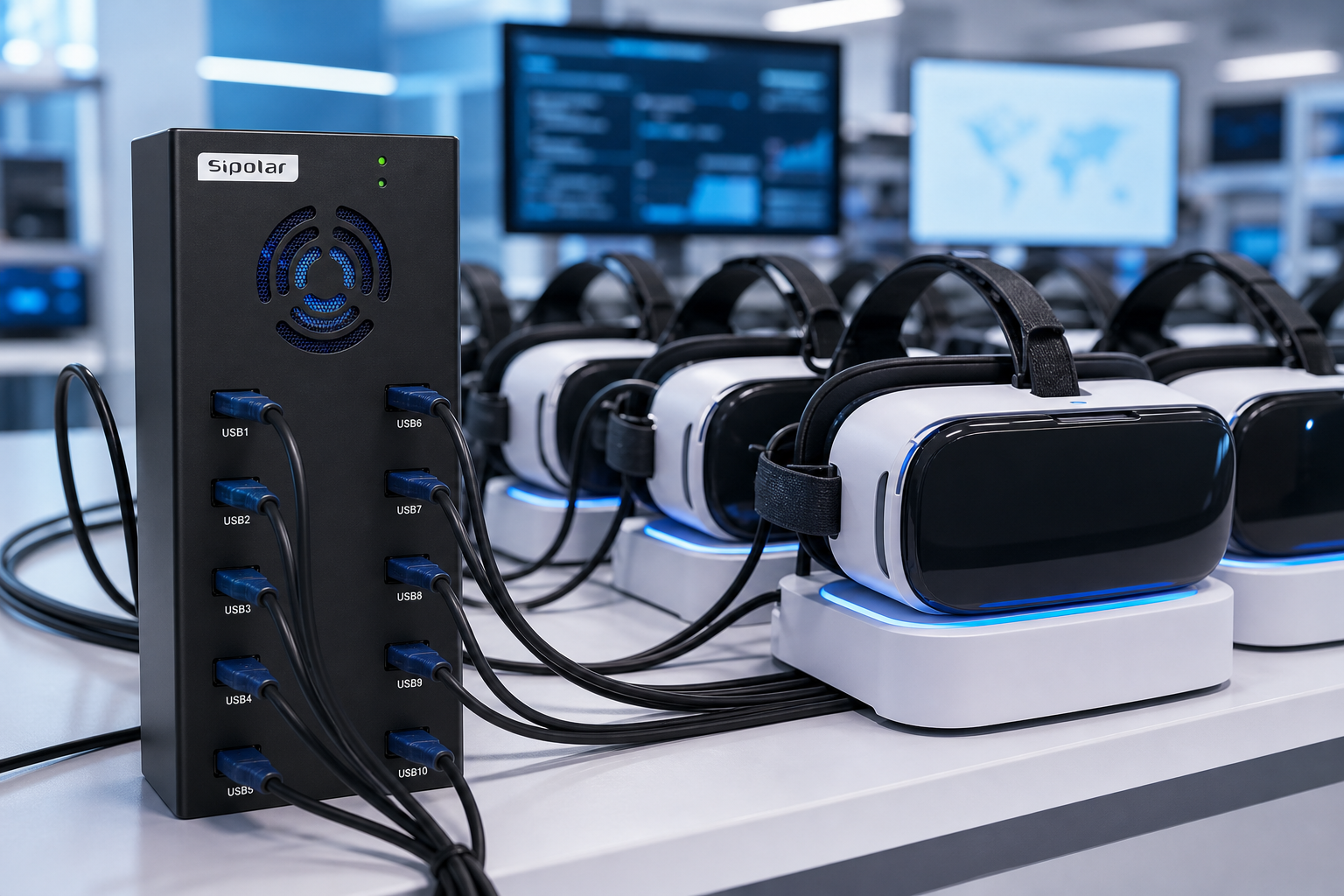
High-capacity USB hubs provide the power delivery and bandwidth needed to support multiple VR headsets from a single host system, enabling centralized control while simplifying cable management and deployment logistics.
Core Advantages
Sufficient power output per port to support VR headsets with active cooling, tracking systems, and integrated audio without compromising performance.
USB 3.0 throughput sustains video, sensor data, and audio streams for multiple simultaneous VR sessions without latency or dropouts.
Single connection point simplifies deployment, reduces cable complexity, and enables efficient equipment monitoring and troubleshooting.
Selection Matrix
| Use Case | Key Requirement | Recommended Configuration |
|---|---|---|
| Small VR experience zone (4-8 headsets) | Compact footprint with adequate power per port | Single high-power USB 3.0 hub with 7-10 ports |
| Medium training facility (8-16 headsets) | Centralized management and cable organization | Dual hub configuration with dedicated power supply |
| Large entertainment venue (16+ headsets) | Scalability, monitoring, and charging management | Multi-tier hub system with integrated charging stations |
| Educational lab (variable headset count) | Flexibility and equipment lifecycle management | Modular hub array with storage and charging integration |
System Integration
From connection hubs to charging stations and monitoring systems, every component is designed to work together for reliable multi-user VR operations.


Implementation Path
Determine headset count, concurrent users, physical space, power availability, and host system capacity.
Select hub capacity, plan cable routing, establish charging workflow, and integrate monitoring systems.
Verify all headsets maintain stable connectivity, adequate power delivery, and acceptable performance during simultaneous operation.
Commission the system, train operators on equipment management, and establish maintenance protocols for ongoing reliability.