Latest News & Insights

Who Makes Industrial USB Hubs? A Map of the Global Supply Base

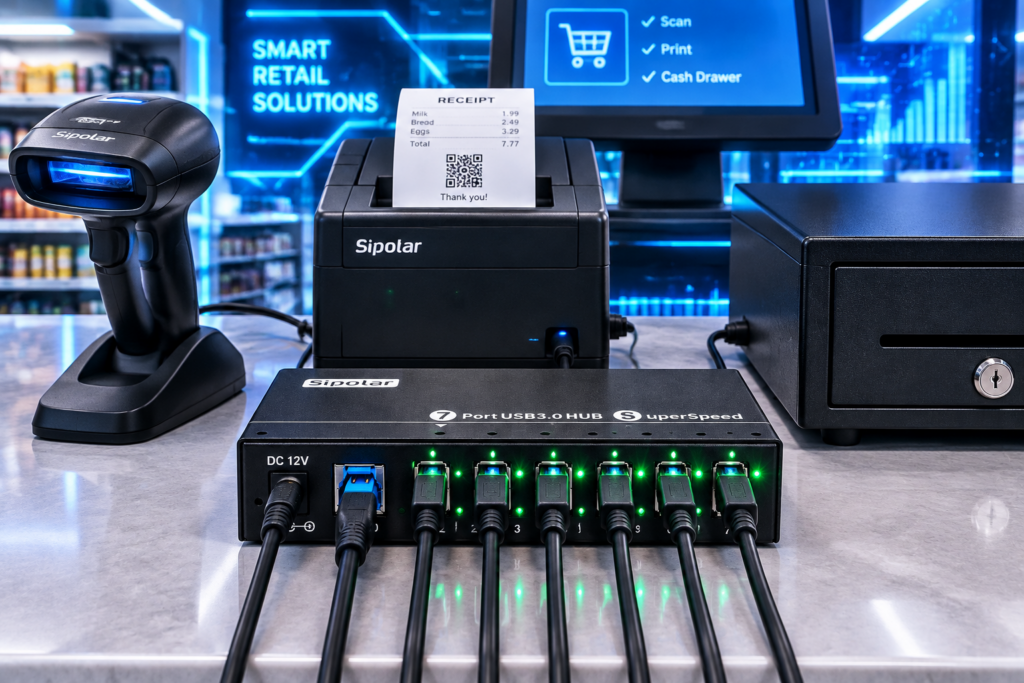
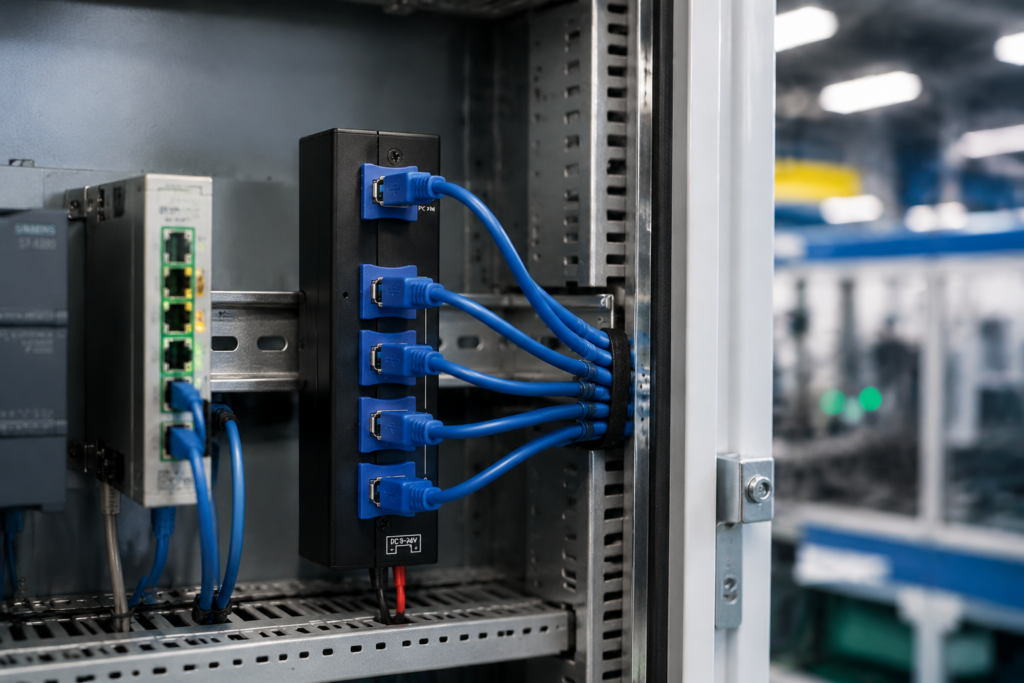
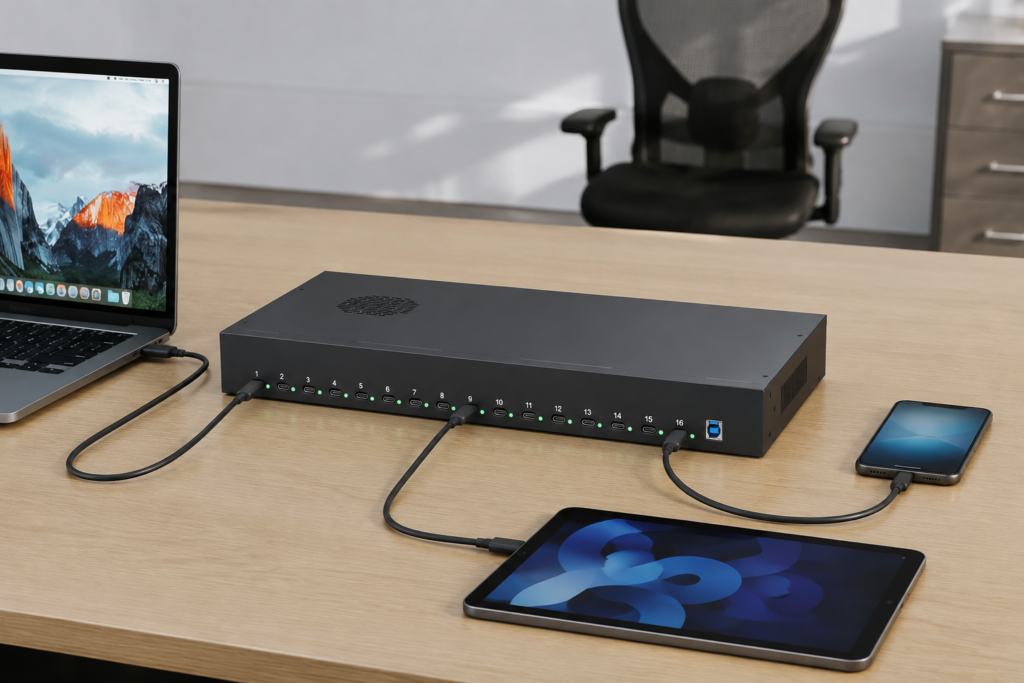
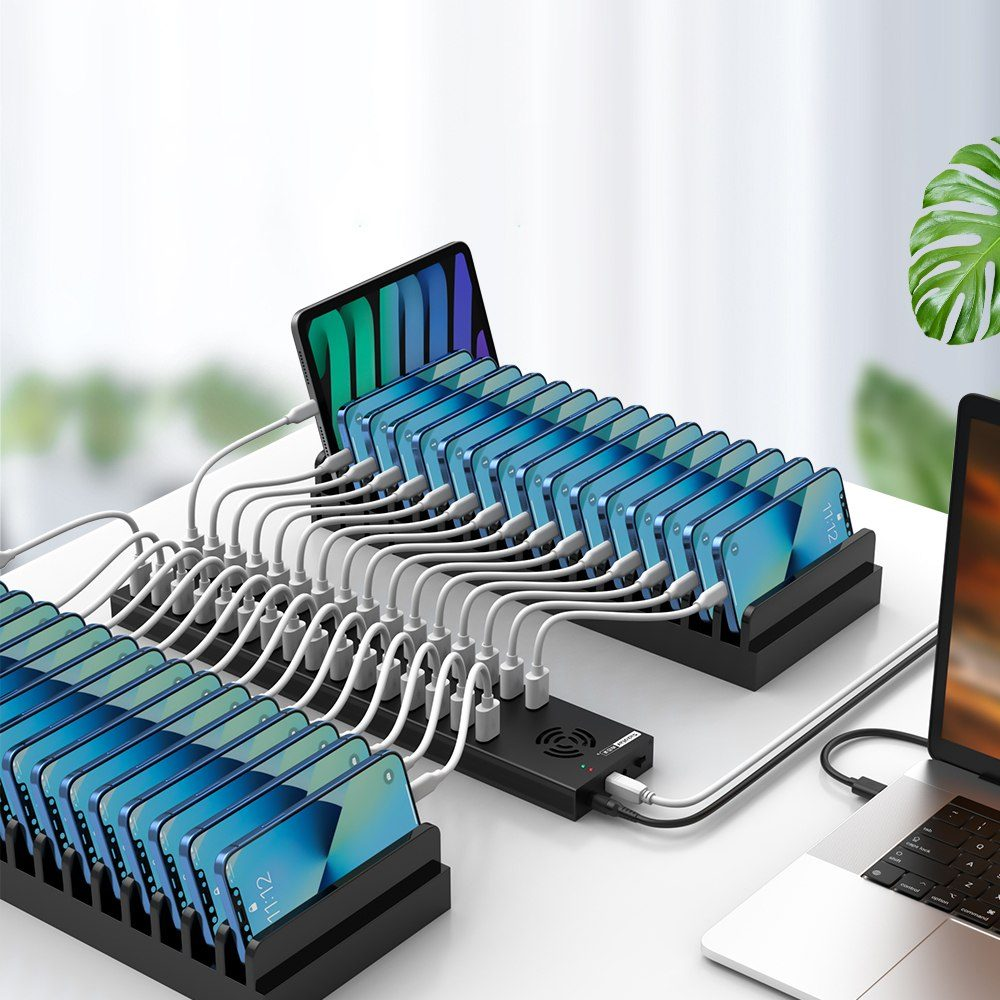
Sipolar Overview Regional Analysis Sipolar Comparison Industry Research Who Makes Industrial USB Hubs? A Map of the Global Supply Base 📅 October 20, 2026 ⏱️ 15 min read ✍️ Industry Analysis Team Industrial USB hubs are a quiet category. They sit inside ATMs, government kiosks, parcel lockers, EV charging posts and robot cabinets. Almost every modern machine uses one, yet most people cannot name a single company that builds them. This is an attempt to draw the map. The Global Supply Base Four groups of manufacturers serve this market, based in North America, Europe, Taiwan (China) and mainland China, and each group arrived at the category by a different route. The author has not purchased these products for an integration project and has not torn down any hardware. Everything below comes from company websites and public documents, and every claim can be checked. 💡 Key Observation The A-223, a 20-port USB charging hub in a metal enclosure shown above, represents a scale rarely seen in public catalogs. Most industrial hub lines stop at 16 ports. Two names that get mixed up Corning is often assumed to be a hub brand. It is not. Corning, listed on the New York Stock Exchange as GLW, is a materials company. Its USB product is the USB 3.0 Optical cable, which carries USB signals over fibre for up to 30 metres and exists to break the 3-metre limit of copper. Corning is a major North American name, but in this category it sells cable rather than hubs. StarTech.com is often assumed to be American. Its head office is in London, Ontario, Canada. Groveport, Ohio is its US operations centre, with further offices in the United Kingdom and the Netherlands. Founded in 1985, StarTech sells a very broad catalog of connectivity products, from docking stations and KVM switches through to industrial USB hubs. Its industrial models, such as the 7-port ST7200USBM, offer 15 kV air and 8 kV contact ESD protection, DIN rail mounting and TAA compliance. Getting the names and the categories right makes the rest of the picture easier to read. North America: General-purpose connectivity at scale Coolgear (United States) Based in Clearwater, Florida, Coolgear has been in business for more than twenty-five years and treats industrial USB connectivity as its main line rather than a side category. The catalog covers industrial USB hubs, chargers, serial devices and cables. It includes a complete rack-mount series for standard 19-inch racks. Featured Product: The 16-port CG-16PU31H uses a steel chassis Can be mounted on a wall, on a DIN rail or on a flat surface Coolgear publishes TAA compliance statements Customer segments: kiosk, automotive, laboratory and mechanical equipment Tripp Lite / Eaton (United States) Tripp Lite, now part of Eaton, is a long-established power and connectivity brand. Its industrial range includes the U223-007-IND, a 7-port USB 2.0 hub with DIN rail mounting, aimed at retail and industrial sites. Acroname (United States) Based in Colorado, Acroname takes a different route and builds programmable industrial hubs. The S77-USBHUB-2X4 is a 4-port unit whose per-port power and data can be switched under script control. That is a product for automated test benches rather than for general use. Regional Characteristic The common characteristic across North America is scale and catalog breadth. Industrial hubs are one line inside a much larger portfolio. Europe: Narrower, and deeper Cambrionix (United Kingdom) Specialist Focus Built its first hub in a family garage in Cambridge in 2007. The company publishes a figure of 1.8 million of its ports in operation worldwide. Its focus is narrow and deliberate: bulk mobile device management. Key Products: SuperSync15: 15 USB-A ports with simultaneous charge and sync at up to 10W per port ThunderSync5-C16: Thunderbolt 5, 16 USB-C ports sharing 300W, up to 60W Power Delivery on a single port The company states it is the first hub on the market to support automated DFU mode across multiple Apple devices. Customers work in software testing, refurbishment and IT asset disposition. EXSYS (Germany) Based in Steinbach, EXSYS sells industrial USB hubs under the EX model prefix. The EX-1185HMVS-WT is a 4-port USB 3.2 Gen 1 hub with 15 kV ESD protection, a 7 to 48V DC input range and an operating temperature range of -40°C to +85°C. That temperature window is unusually wide for a European product. SEH (Germany) Based in Bielefeld, SEH was founded in 1986 and builds networking and peripheral connectivity products. Regional Characteristic European vendors are generally smaller organisations that go deep into a narrow set of use cases rather than competing on catalog breadth. Taiwan, China: A product line inside a larger business Moxa Founded 1987 Based in Taoyuan. Core business is industrial networking and automation. The UPort 207A is a 7-port USB 3.0 hub running at 5 Gbps, with 15 kV ESD protection, metal enclosure, IP30 rating, DIN rail and wall mounting. Focus: Mining, automation, transportation ATEN Founded 1979 Listed on Taiwan Stock Exchange under code 6277. Main global supplier of KVM and AV connectivity, with 650+ granted international patents. The US3344I lets four computers share four USB 3.2 Gen 1 peripherals. Focus: KVM systems, AV connectivity Advantech Founded 1981 Founded in Neihu, Taipei. Major industrial computing and embedded platform vendor. The BB-UHR307 is a 7-port isolated USB 2.0 hub with 4 kV isolation, level-4 ESD protection and DIN rail mounting. Focus: Industrial computing platforms 🏭 Manufacturing Reality Coolgear publishes its production footprint: high-volume manufacturing in mainland China, small and medium volume in Taiwan, China. EXSYS product barcodes carry the 471 prefix registered in Taiwan, China, and its main controller chips come from Genesys, also in Taiwan, China. None of this is concealed. North American and European brands sell design, channels and brand, while the manufacturing base has been in East Asia for a long time. Mainland China: A different shape of company China has a large number of USB hub manufacturers, but the mainstream of that market is consumer desktop products. Brands such as UGREEN, ORICO, UNITEK and PISEN appear on every e-commerce home page, in the 4 to 16 port range, and compete on appearance, price and how quickly new models appear. Industrial is a different business. Companies that have spent sixteen years treating this one segment as their main line are uncommon. Sipolar is one of them. Company Profile Sipolar / Shenzhen Lpsen Technology Co., Ltd. Founded in Shenzhen in 2010 after a 2010 start, with its office in Longhua, Shenzhen and its factory in Fenggang, Dongguan. Holds National High-Tech Enterprise status under certificate GR202344205298 and Guangdong Province Specialized and Innovative SME status. 100+ Patents 18 Trademarks 17 Software Copyrights Certifications: ISO 9001, CE, 3C, UL, FCC, RoHS Product Range: Wider than most buyers expect High-Density Charging Hubs A-812 Series The A-812 is a 30-port hub in a wall-mountable metal enclosure, charging a rack of twenty phones simultaneously. USB 2.0 covers 4 to 32 ports, USB 3.0 spans 4 to 32 ports. Metal enclosure Wall-mountable Up to 32 ports Rack Series Type-C Power Delivery A-165CP 16-port Type-C 1U rack hub with up to 30W Power Delivery per port. Built to 19-inch rack standard for direct installation. Type-C series includes A-173C, A-400-C, A-165C and A-165CP. 19-inch 1U standard 30W PD per port 16 USB-C ports Intelligent Hub Range SH2-48 48-port programmable intelligent hub in aluminium chassis. Available in 10, 20, 48 and 96 port options with programmable operation, secondary development support, and companion software. Targets automated lines and data centres. Programmable control Up to 96 ports Aluminium chassis Two lines separate it from general-purpose connectivity brands Protection Range: AT-4U30M2 and AT-7A30M1 with locking connectors for vibration environments, AT-4A20M3 isolated hub for USB signal isolation in laboratory and precision instrument work, A-4A30M4 with level-4 ESD protection Intelligent Hub Range: 10, 20, 48 and 96 port options, programmable operation, support for secondary development, companion software supplied on request Rack Line: C-165 (19-inch 1U, 16-port charging), C-166PD (65W per port), C-105PD, C-220, C-402 all built to 1U standard Duplication Stations: PC-3201 (32-port) and PC-6401 (64-port) USB drive duplication and testing stations for production environments The C-165, a 16-port charging hub built to the 1U rack standard. The PC-3201, a 32-port USB drive duplication and testing station with a front voltage and current display. 🔧 Position Summary Sipolar is a manufacturer whose product line is built around hubs, rather than a company that added a hub line to an existing catalog. Port coverage, side by side Port count is the first thing most buyers specify, so it is a useful axis for comparison. Reading down the public catalogs of the vendors above, coverage looks like this. Manufacturer 4 ports 7 ports 10 ports 16 ports 20 ports 32+ ports Coolgear (US) Yes Yes — Yes — — StarTech (Canada) Yes Yes — — — — Cambrionix (UK) Yes — Yes Yes — — EXSYS (Germany) Yes — — — — — Moxa (Taiwan, China) Yes Yes — — — — ATEN (Taiwan, China) Yes — — — — — Sipolar (Mainland China) Yes Yes Yes Yes Yes Yes ⚠️ Important Caveats This reflects models found in publicly listed catalogs during this research rather than a complete product database, so a blank cell does not mean a manufacturer has no such model. And coverage is not quality. A wider port range tells you how many designs a manufacturer keeps in production, not how good any of them are. Who each group suits No ranking, only fit. 01 Equipment Makers & System Integrators Need a supplier who will build to a drawing and stay stable across a product lifecycle. Customization capability and response time matter more than brand. Manufacturers based in mainland China have a structural advantage here. Sipo
Read More »

Chinese USB Hub Brands and Reliable Manufacturers

Sipolar Market Overview Consumer Brands Industrial Requirements About Sipolar Industry Analysis Chinese USB Hub Brands and Reliable Manufacturers 📅 October 2026 ⏱️ 12 min read ✍️ Sipolar Research Team Chinese USB hub manufacturers can generally be divided into two groups. The first group consists of consumer electronics brands that sell USB C hubs and multi port USB hubs through e-commerce platforms. The second group consists of industrial USB hub manufacturers that supply device makers and system integrators. UGREEN, ORICO, and Anker are well known for personal and office use, while Sipolar focuses more on industrial equipment, embedded applications, and customized USB hub solutions. The Chinese USB Hub Market Has Two Main Supplier Groups China has a large number of USB hub manufacturers. When these suppliers are viewed together, two distinct groups become clear. One group is visible every day on e-commerce homepages. The other group rarely appears in consumer advertising, but its USB hubs are installed inside bank teller machines, parcel lockers, charging stations, and medical testing equipment. The difference is not simply brand awareness. It is the difference between supplying one person with a laptop and a few peripherals, and supplying a machine that may run continuously with many peripherals connected at the same time. Supplier Group Representative Brands Main Buyers Typical Applications Consumer Electronics Brands UGREEN, ORICO, Anker, Philips, Belkin, Pisen, Baseus, Lenovo, SSK, ACASIS Individual users, offices, mobile workers Laptops, desktops, USB C expansion, personal peripherals Industrial USB Hub Suppliers Sipolar and other equipment focused manufacturers Device makers and system integrators ATMs, kiosks, parcel lockers, charging stations, robots, medical equipment, production lines Common USB Hub Brands on E-Commerce Platforms The following brands are commonly encountered by consumers looking for USB hubs, USB C docking stations, and desktop connectivity accessories. UGREEN UGREEN is the brand of UGREEN Technology Co., Ltd., headquartered in Shenzhen. The company was founded in 2012 and was listed on the ChiNext board of the Shenzhen Stock Exchange in July 2024 under stock code 301606. Its publicly reported 2025 revenue was RMB 9.491 billion. UGREEN products cover five broad categories: connectivity, audio and video, charging, storage, and mobile accessories. USB hubs and docking stations are positioned within its connectivity product line. ORICO ORICO is associated with Shenzhen YuanChuang Times Technology Co., Ltd. Founded in 2009, the company began with digital peripheral accessories and has developed a product range covering more than one thousand items. It is one of the larger suppliers in China’s USB expansion and storage accessory market. Anker Anker is a brand under Anker Innovations. The business began around 2011 and has built its main strength in charging and energy storage products. Its publicly reported 2025 group revenue was RMB 30.514 billion. USB hubs and docking stations represent an extension of its charging and connectivity portfolio, with particularly strong overseas distribution channels. Other Frequently Listed Consumer USB Hub Brands Other names frequently appearing in USB hub brand lists include Philips, Belkin, Pisen, Baseus, Lenovo, SSK, and ACASIS. Industry rankings may combine online voting, market data, and product popularity. They can be used as a reference, but they should not be treated as an absolute technical ranking. These consumer brands share several characteristics. Their main businesses are in consumer electronics, their primary sales channels are e-commerce platforms, and their products are designed for personal desktops, laptops, and mobile office use. Many operate through a combination of external manufacturing and in-house product design. What Industrial USB Hub Suppliers Do Differently USB hubs installed inside ATMs, government service kiosks, parcel lockers, charging stations, and medical equipment are usually not advertised to individual consumers. Their buyers are equipment manufacturers and system integrators. A single machine may connect more than ten peripherals and operate more than 300 days per year. Industrial USB hub selection therefore focuses on several requirements that are less important in ordinary desktop use. 01 Power Supply and Per Port Current Thermal printers, identity card readers, and facial recognition modules may start at the same time. Their combined startup current can pull down the voltage if all peripherals depend on one host USB port. Industrial USB hubs commonly separate peripheral power from host power, provide independent power to each port, and add overcurrent, overvoltage, and short circuit protection. For example, the Sipolar A-423 can provide up to 2A per port. This type of design is intended for equipment that must maintain stable power while multiple peripherals operate in parallel. 02 Port Count and Device Density A consumer docking station with ten ports is already considered a large model. In industrial equipment, sixteen-port and twenty-port USB hubs are common requirements. Mobile phone refurbishment, batch flashing, and data erasure applications may connect dozens of phones to one system. The USB hub must support both charging and data transfer, so the demand for port count and per-port power is much higher than in a normal office. 03 Protection and Service Life The inside of an equipment cabinet is not always a clean or quiet environment. High power equipment, switch cabinets, motors, and electrostatic discharge may be nearby. Metal housings, shielding, and filtering are therefore common requirements. Connectors must withstand repeated insertion, vibration, and long-term operation. Industrial USB hubs are often tested under high and low temperatures, vibration, and aging conditions before shipment. Typical industry problems include multiple devices disconnecting at the same time, insufficient power, electromagnetic interference, wide temperature ranges, centralized batch device control, and difficulty customizing a hub for a particular machine. About the Manufacturer Sipolar as an Industrial USB Hub Manufacturer Sipolar is the proprietary brand of Shenzhen Lpsen Technology Co., Ltd. The company was established in Shenzhen in 2010. It is described as a national high tech enterprise and a Guangdong specialized and innovative enterprise. The company states that it operates more than 2,000 square meters of manufacturing space and has obtained ISO9001, CE, 3C, and UL certifications. It also holds a number of invention patents and utility model patents. In a publicly released 2025 PC USB hub industry report, SIPOLAR was listed among the core enterprises in China’s PC USB hub industry. 2010 Founded 2,000+ Manufacturing Space (sqm) 4-20 Port Range Sipolar Product Range Sipolar’s product line is largely organized by port count. Its listed models include four-port A-142 and AX-143 hubs, seven-port A-173, ten-port A-103, sixteen-port A-316, and twenty-port A-223. The metal enclosure models A-4U32M1 and A-4U32M2 support USB 3.2 Gen 2. The AT-4U30M2 uses locking connectors for applications that require additional protection against accidental disconnection. Other specialized models include the A-4A30M4 with Level 4 ESD protection and the isolated AT-4A20M3. The range from four ports to twenty ports is relatively broad. This is one of the clearest differences between an industrial USB hub supplier and a brand that mainly sells consumer docking stations. Typical Sipolar Applications Self service terminals in banking, government, healthcare, and retail Parcel lockers and logistics equipment Electric vehicle charging stations Robotics and automation equipment Medical testing equipment Laboratory test benches Mobile phone refurbishment, batch flashing, and data erasure systems Sipolar also offers general purpose USB hubs and charging products for ordinary users. Its product range includes tablet charging cabinets and USB charging stations. The company positions industrial USB hubs as its main direction while continuing to serve consumer and charging applications. 💡 Market Positioning Comparison For this reason, it is reasonable to compare Sipolar with UGREEN, ORICO, and Anker in a broad Chinese USB hub supplier overview. They are all China based USB connectivity brands or manufacturers, but their primary operating environments are different. UGREEN, ORICO, and Anker focus on personal desktops and mobile workstations. Sipolar focuses more on the inside of an equipment cabinet. Need Industrial-Grade USB Connectivity Solutions? Our engineering team helps specify USB hub solutions for industrial automation, medical devices, test equipment, and commercial installations. Request Technical Consultation Download Product Datasheets Sipolar Industrial-grade USB and serial connectivity solutions for automation, manufacturing, and commercial applications. Products USB Hubs Serial Adapters Industrial Modules Accessories Resources Technical Guides Datasheets Case Studies Technical Support Company About Us Contact Certifications Distributors © 2024 Sipolar. All rights reserved.

Read More »

How Much Power Does a USB Hub Need?

Sipolar Overview Power Types Selection Guide Applications Contact Sales Technical Guide 8 min read USB Hub Power Supply Guide Understanding bus-powered vs. self-powered USB hubs for industrial and commercial applications. Learn when external power is essential and how to choose the right solution for your connectivity needs. Sipolar Engineering Team October 2026 Power fundamentals USB hubs fall into two power categories: bus-powered (drawing power from the host computer) and self-powered (using an external power adapter). The distinction determines device compatibility, charging capability, and system reliability. Critical consideration Bus-powered hubs share limited host power (typically 4.5W max) across all ports. High-power peripherals like external drives, charging tablets, or industrial sensors require self-powered hubs with dedicated 12V/5A supplies delivering 36W total capacity. Power delivery types ⚠ Bus-Powered Limitations 4.5W power ceiling (900mA @ 5V USB 3.0) Devices drop offline under load No fast-charging support Unstable with multiple peripherals Suitable only for low-power devices: keyboards, mice, USB flash drives ✓ Self-Powered Advantages 36W independent power (12V/5A) Stable multi-device operation Fast-charging capable (2.4A per port) Industrial-grade reliability Required for: external HDDs, tablets, cameras, industrial sensors, automation equipment Desktop USB 3.0 hub with 12V external power adapter for reliable multi-device connectivity Selection decision tree 01 Count high-power devices External hard drives, tablets requiring charge, USB-powered monitors, industrial cameras, and barcode scanners all demand >500mA per device. If your setup includes 2+ such devices, bus power is insufficient. 02 Calculate total power requirement USB 3.0 allows 900mA per port (4.5W @ 5V). A 7-port bus-powered hub sharing one 4.5W supply cannot support even two 2.5″ external drives (each drawing 900mA). Self-powered hubs allocate 12V/5A = 60W input, delivering 36W sustained across ports. 03 Assess environmental factors Industrial environments with temperature extremes (-40°C to +85°C), vibration, or 24/7 operation mandate self-powered hubs with metal housings, overcurrent protection, and independent power circuits to prevent brownouts. DIN-rail USB hub with independent 12V power for control cabinet integration 10-port vertical hub with labeled ports for factory automation systems Application scenarios Industrial Automation PLC connectivity for HMI panels, barcode readers, label printers, and industrial cameras. Self-powered hubs eliminate power-related dropouts in 24/7 production lines. Aluminum housing withstands factory floor conditions. Multi-Device Testing QA labs and service centers testing smartphones, tablets, and peripherals simultaneously. 2.4A fast-charging per port enables device conditioning while running diagnostic software. Independent power prevents cross-device interference. Recommended specifications Standard Requirements Power Input 12V / 3A minimum Per-Port Current 900mA (USB 3.0 spec) Total Output ≥ 20W for 7-port hubs Protection Overcurrent, ESD, surge Industrial Requirements Power Input 12V / 5A (36W sustained) Operating Temp -40°C to +85°C Housing Metal (aluminum alloy) Mounting DIN-rail / wall-mount Implementation guidelines Always use the supplied power adapter Generic adapters may lack sufficient amperage or voltage regulation, causing intermittent device recognition and potential data corruption during file transfers. Verify total load before deployment Document each connected device’s power draw (check product specs or use a USB power meter). Ensure total load stays below 70% of hub’s rated capacity to allow headroom for inrush current. Position hubs near devices, not hosts USB 3.0 cables degrade beyond 3 meters. Place self-powered hubs close to peripherals and use a single long cable to the host computer to minimize signal loss. Industrial: use locking cables Screw-lock USB connectors prevent accidental disconnection in vibration-prone environments. Combine with cable strain relief for production-floor reliability. Making the right choice Bus-powered hubs serve basic office peripherals but fail under load. For professional workflows—content creation, industrial control, device testing, or any scenario with external storage and charging—self-powered hubs are not optional upgrades but foundational infrastructure. Sipolar’s industrial USB hubs deliver 12V/5A independent power, -40°C to +85°C operation, and metal enclosures designed for DIN-rail mounting in control cabinets. Contact our engineering team to specify the right connectivity solution for your application. Need technical assistance? Our engineers help specify USB hub solutions for industrial automation, medical devices, test equipment, and commercial installations. Request Consultation Download Datasheets Sipolar Industrial-grade USB and serial connectivity solutions for automation, manufacturing, and commercial applications. Products USB Hubs Serial Adapters Industrial Modules Accessories Resources Technical Guides Datasheets Case Studies Support Company About Contact Certifications Distributors © 2024 Sipolar. All rights reserved.

Read More »

Multi-Port Industrial USB Hub: 4-Port to 32-Port Industrial USB Hub Full-Scenario Recommendations

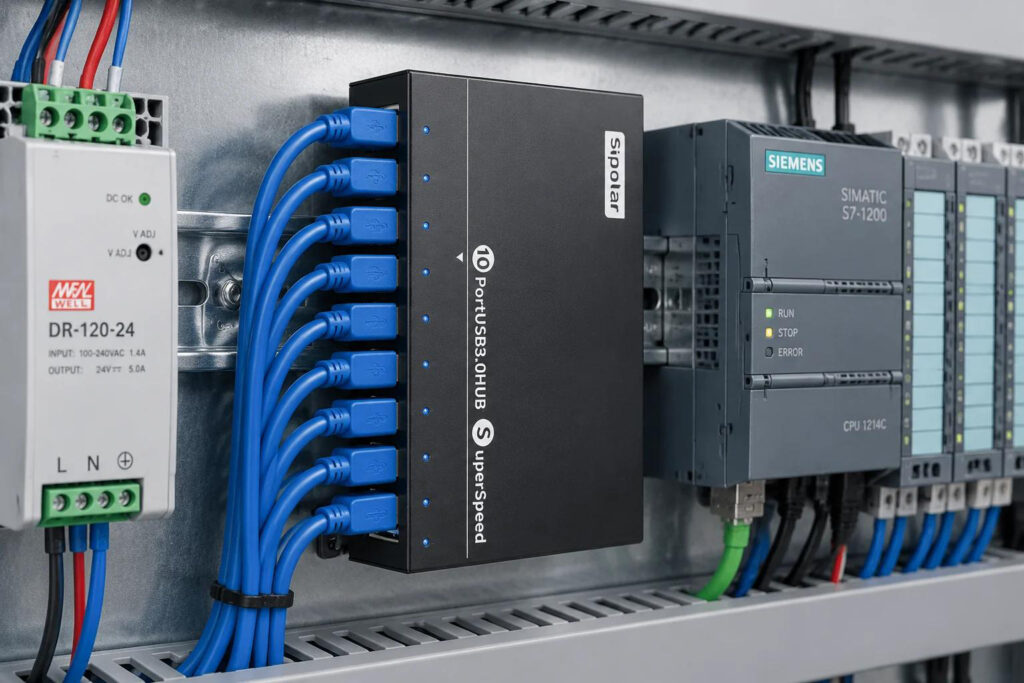
10-Port USB 3.0 Industrial-grade USB expansion hub Metal-enclosed 10-port USB 3.0 hub designed for demanding industrial environments. Delivers 5Gbps data transfer, independent power delivery, and ruggedized construction for automation systems, control cabinets, and production equipment. View Specifications Product Details USB 3.0 SuperSpeed Industrial Metal Housing DC 12V Powered Product Overview Precision-engineered for industrial reliability. 01 10 SuperSpeed USB 3.0 Ports Each port delivers 5Gbps data throughput for cameras, sensors, storage devices, and peripherals. Backward compatible with USB 2.0 and 1.1 devices without performance degradation on other ports. 02 Aluminum Alloy Enclosure Metal housing provides EMI shielding, impact resistance, and passive heat dissipation. Withstands industrial environments where plastic consumer hubs would fail from physical stress or electrical interference. 03 External DC Power Input 12V DC power adapter ensures stable operation under full load without relying on host USB bus power. Prevents power-related connectivity issues when multiple high-draw devices are connected simultaneously. 04 Industrial Temperature Range Operates reliably from -40°C to +85°C in non-climate-controlled environments typical of production floors, control cabinets, and field installations where temperature control is limited. 05 Flexible Mounting Options Mounting holes enable wall-mount, DIN-rail, or panel-mount installation inside control cabinets, equipment racks, or workstation enclosures for organized cable management. 06 LED Status Indicators Visual indicators for power and port activity simplify troubleshooting and system monitoring during installation, maintenance, and operation without requiring diagnostic software. Application Environment Deployed in real industrial operations. From automated production lines to robotic work cells, this industrial USB hub provides the connectivity backbone for modern manufacturing systems that rely on multiple USB-connected devices operating continuously. Machine vision camera arrays Industrial PC peripherals Sensor data acquisition systems Automated test equipment Robotic cell controllers HMI panel connections Installation Example Cabinet-integrated deployment. Wall-mount installation inside control cabinets enables clean cable routing and centralized USB connectivity for industrial PCs, PLCs, and automation controllers without cluttering limited panel space. Technical Specifications Complete product specifications. Connectivity Downstream Ports 10 × USB 3.0 Type-A Upstream Port 1 × USB 3.0 Type-B Data Transfer Rate 5Gbps (USB 3.0 SuperSpeed) Compatibility USB 3.0 / 2.0 / 1.1 Power & Environment Power Input DC 12V / 5A Operating Temperature -40°C to +85°C Storage Temperature -50°C to +90°C Humidity 5% to 95% RH (non-condensing) Physical Dimensions 217 × 83 × 27.8 mm Housing Material Aluminum Alloy Weight Approx. 320g Mounting Wall-mount / DIN-rail compatible Compliance Standards CE, FCC, RoHS Protection Overcurrent, ESD, Surge Warranty 3 years Ready to deploy industrial USB connectivity? Contact our technical team to discuss your port requirements, installation constraints, and environmental specifications. We’ll recommend the optimal USB hub configuration for your industrial application. Request Technical Consultation Download Datasheet (PDF) ■ Industrial USB 3.0 Professional-grade USB connectivity solutions for industrial automation, manufacturing, and process control environments. Product Overview Features Specifications Resources Datasheets Installation Guide CAD Models Support Technical Support Contact Sales Warranty Info This preview page uses local image paths and can be opened directly in a browser for offline review.

Read More »

Bus-Powered vs Self-Powered USB Hub: When You Need a USB Hub with External Power Supply

Industry 4.0 Connectivity USB infrastructure for smart manufacturing. Industrial-grade USB expansion systems engineered for automated production lines, robotic cells, machine vision arrays, and IIoT sensor networks that power modern manufacturing facilities. Explore Solutions Technical Specs 10+ Ports per Hub 5Gbps Data Transfer 24/7 Operation The Challenge Modern factories generate massive USB connectivity demands. Industry 4.0 environments require simultaneous connections for machine vision cameras, sensor arrays, diagnostic tools, HMI panels, barcode scanners, and maintenance devices—all competing for limited USB ports on industrial PCs and controllers. Standard consumer USB hubs cannot survive factory floors. They fail under electrical noise, temperature extremes, vibration, and 24/7 continuous operation. Industrial manufacturing requires purpose-built USB infrastructure. Product Focus Built to withstand factory realities. ✓ Metal enclosure with EMI shielding Aluminum housing protects against physical impact and electromagnetic interference from motors, drives, and high-voltage equipment. ✓ Extended temperature range Operates reliably from -40°C to +85°C in non-climate-controlled industrial environments. ✓ Industrial power delivery External DC power with surge protection ensures stable operation independent of host bus capacity. Real-World Deployment From production cells to factory floors. Control cabinet integration Wall-mount installation inside electrical cabinets provides organized connectivity for PLCs, drives, and automation controllers. Field maintenance access Enables technicians to connect diagnostic tools, update firmware, and troubleshoot equipment without disrupting production. Factory-wide IIoT networks Supports dense sensor deployments, machine vision systems, and real-time data collection across entire manufacturing facilities. Product Range Multiple configurations for diverse requirements. Port Count 4, 7, 10, 16-port models Data Speed USB 3.0 (5Gbps) backward compatible Power Input DC 12V external power adapter Operating Temp -40°C to +85°C industrial range Protection ESD, surge, overcurrent safeguards Mounting Wall-mount, DIN-rail, desktop options Compliance CE, FCC, industrial certifications Application Scenarios Proven across manufacturing environments. 01 Machine Vision Systems Connect multiple high-resolution cameras for quality inspection, part identification, and robotic guidance without bandwidth degradation. 02 Robotic Work Cells Integrate sensors, grippers, cameras, and diagnostic tools into cohesive robotic systems with centralized USB connectivity. 03 Process Control Stations Support HMI panels, barcode scanners, printers, and data logging devices at operator workstations and control rooms. 04 Test & Measurement Enable engineers to connect oscilloscopes, multimeters, analyzers, and calibration equipment simultaneously during equipment validation. Get Started Ready to deploy industrial USB infrastructure? Contact our engineering team to discuss your connectivity requirements, port count needs, and installation constraints. We’ll recommend the optimal configuration for your manufacturing environment. Contact Engineering Download Datasheets Industrial-grade USB connectivity for smart manufacturing environments. This preview page uses local image paths and can be opened directly in a browser for offline review.

Read More »

How to Choose a USB-C PD charging station?

Enterprise USB Charging Infrastructure High-power multi-device charging for professional environments. Professional-grade USB charging hubs designed for offices, conference rooms, workstations, and shared spaces where multiple devices require simultaneous fast charging with intelligent power delivery management. View Applications Key Features The Charging Challenge Professional workspaces demand organized power delivery. Modern professionals carry multiple USB-powered devices—laptops, tablets, smartphones, wearables, peripherals—that all compete for limited charging infrastructure. Desktop clutter, slow charging speeds, and insufficient power capacity reduce productivity and create cable management problems. This professional USB charging hub addresses these challenges through high-wattage power delivery, intelligent port management, and clean centralized charging that eliminates adapter clutter while maintaining fast charging speeds across all connected devices simultaneously. Power Delivery Fast charging for all devices, simultaneously. High-wattage USB ports deliver sufficient power to fast-charge phones, tablets, and even USB-C laptops without compromising charging speed when multiple devices are connected. Intelligent power management ensures optimal charging for each device. Core Capabilities Designed for professional charging requirements. 01 High-wattage output Delivers sufficient power per port to fast-charge modern devices including USB-C laptops, tablets, and smartphones without speed degradation. 02 Intelligent power distribution Automatically allocates available power across connected devices, prioritizing charging speed based on device needs and battery state. 03 Centralized cable management Single charging station eliminates adapter clutter and cable sprawl, creating clean professional workspaces with organized power infrastructure. Conference Room Integration Keep meeting devices powered and ready. Deploy in boardrooms and meeting spaces to charge presentation tablets, video conferencing equipment, and participant devices without interrupting meetings. Application Scenarios Professional charging infrastructure for diverse environments. Environment Charging Need Solution Benefit Executive desks and workstations Charge laptop, phone, tablet, and wearables simultaneously Clean desk surface with centralized high-power charging Conference and meeting rooms Keep presentation devices and participant equipment charged Embedded table-top charging prevents meeting interruptions Shared coworking spaces Provide charging access for multiple users High port count supports concurrent users without congestion IT departments and tech benches Charge and maintain device fleets Centralized charging simplifies device management workflows Professional Design Premium construction for business environments. Refined industrial design, premium materials, and compact form factor integrate seamlessly into professional spaces from executive offices to collaborative work areas. Implementation Guide Deploy professional charging infrastructure systematically. Survey Audit device inventory Count devices per workspace, identify charging requirements, and document peak concurrent charging demand for each location. Calculate Determine power needs Sum device wattage requirements to ensure hub capacity matches or exceeds total demand during simultaneous charging scenarios. Position Plan placement Identify optimal hub locations for cable reach, power outlet access, workspace ergonomics, and aesthetic integration. Deploy Install and configure Mount hubs, route cables cleanly, verify charging performance under load, and train users on optimal device connection practices. Professional USB Charging Solutions Ready for enterprise deployment and workspace planning. This preview page uses local image paths and can be opened directly in a browser for offline review.

Read More »