
A Deep Dive into the Sipolar A-4A30M4 Aluminum 4-Port USB 3.0 Hub
In automated equipment and harsh industrial environments, the stability and durability of a USB hub directly impact production efficiency. The Sipolar A-4A30M4, built with an aluminum alloy body and engineered for industrial scenarios, exemplifies the essential differences between industrial-grade and consumer-grade USB hubs. This article explores how this aluminum 4‑port USB 3.0 hub outperforms home‑use models in performance, construction, and longevity to meet the most demanding industrial requirements.
Core Differences: Industrial vs. Consumer USB Hubs
1.Material: Aluminum for Durability and Heat Dissipation
Consumer USB hubs are often made of plastic, which is prone to cracking and offers poor heat dissipation. The Sipolar A‑4A30M4 features a scratch‑resistant aluminum alloy shell that not only withstands tough conditions but also provides excellent thermal management, ensuring stable operation under high temperature and heavy loads.
2.Design & Workmanship: Built to Last
The A‑4A30M4 sports a clean, rugged design with well‑spaced ports and gold‑plated metal connectors for enhanced signal integrity and longer service life. Its overall construction meets industrial standards, with vibration and electromagnetic interference resistance far superior to consumer‑grade products.
3.Power Supply & Stability: Independent Voltage Regulation
Industrial‑grade hubs come with an external power adapter and built‑in voltage regulation chips, preventing device dropouts caused by current fluctuations. Consumer hubs typically draw power solely from the computer’s USB port, which often cannot supply enough current for multiple devices.
Q&A: How does an aluminum housing affect USB hub performance?
Aluminum not only increases mechanical strength but also significantly improves heat dissipation, preventing overheating that could compromise device stability.
Two Sipolar Aluminum 4‑Port Hubs Compared
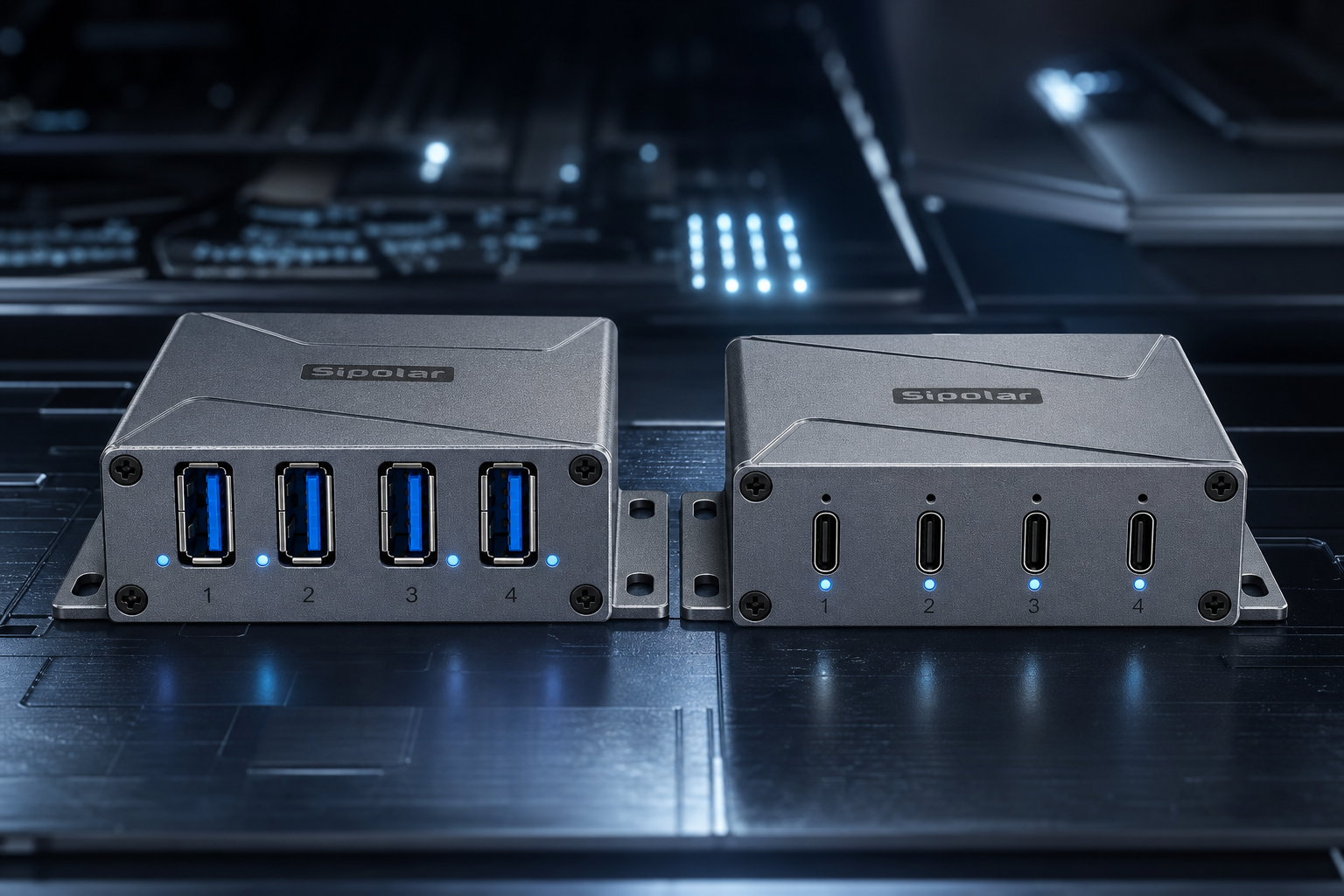
Sipolar A‑4A30M4 (USB‑A 3.0)
Aluminum body for superior protection and cooling
Four USB 3.0 ports, up to 5 Gbps transfer speed
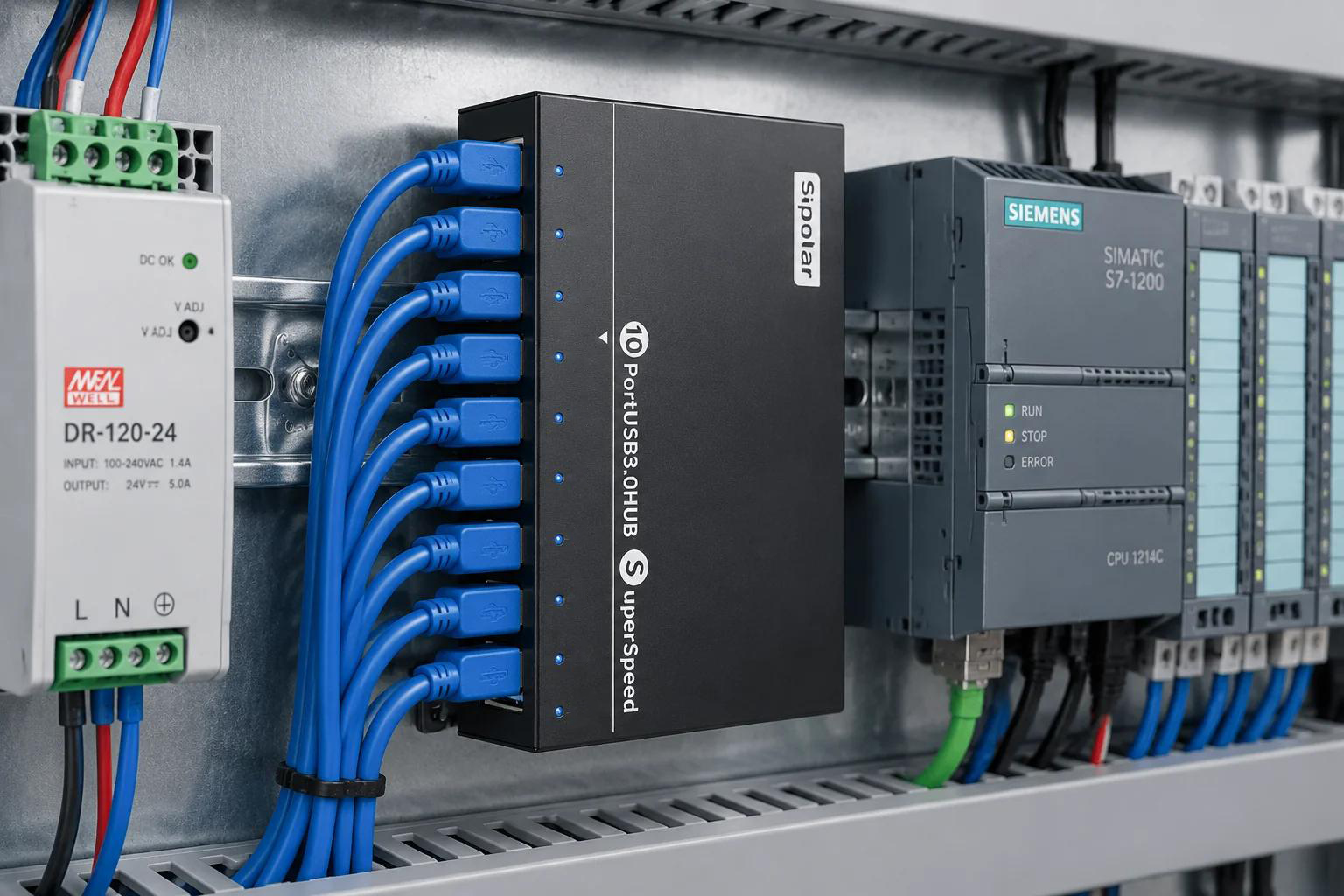
Ideal for expanding industrial equipment – automation instruments, industrial printers, etc.
Compact 4‑Port USB‑C 3.2 Model
Minimalist aluminum design, square and portable
USB 3.2 speeds up to 10 Gbps
Perfect for high‑speed data acquisition, professional video capture
Small footprint, easy to install in tight industrial spaces
Selection Guide: Which One Fits Your Industrial Environment?
If you need stable power delivery to support multiple devices simultaneously, the A‑4A30M4 is the robust, reliable choice.
For extreme transfer rates – large industrial data sets or high‑definition video – the USB‑C 3.2 model is your best bet.
If space and aesthetics matter, the ultra‑compact USB‑C version can be easily hidden or mounted.
Q&A: Can an industrial‑grade USB hub really boost productivity?
By providing stable power and strong interference rejection, it reduces device disconnections and data packet loss, significantly cutting troubleshooting costs.
Typical Applications & Customer Feedback
An automation factory used the A‑4A30M4 to connect multiple industrial devices and saw device dropout rates drop by over 80%, greatly improving continuous assembly line efficiency. A video editing studio adopted the USB‑C 3.2 hub to ensure real‑time, low‑latency transmission of high‑resolution footage, meeting the demands of professional post‑production.
Summary
Aluminum construction, industrial‑grade design, and stable power delivery are the three pillars that set the Sipolar A‑4A30M4 and the USB‑C 3.2 hub apart in the industrial field. Choosing the right industrial‑grade USB hub is the key to ensuring long‑term, trouble‑free operation of your equipment.
Is your production site experiencing issues due to inadequate hub performance? Feel free to reach out – let’s explore the best industrial connectivity solutions together.